


SPACE December2025 (No. 697)
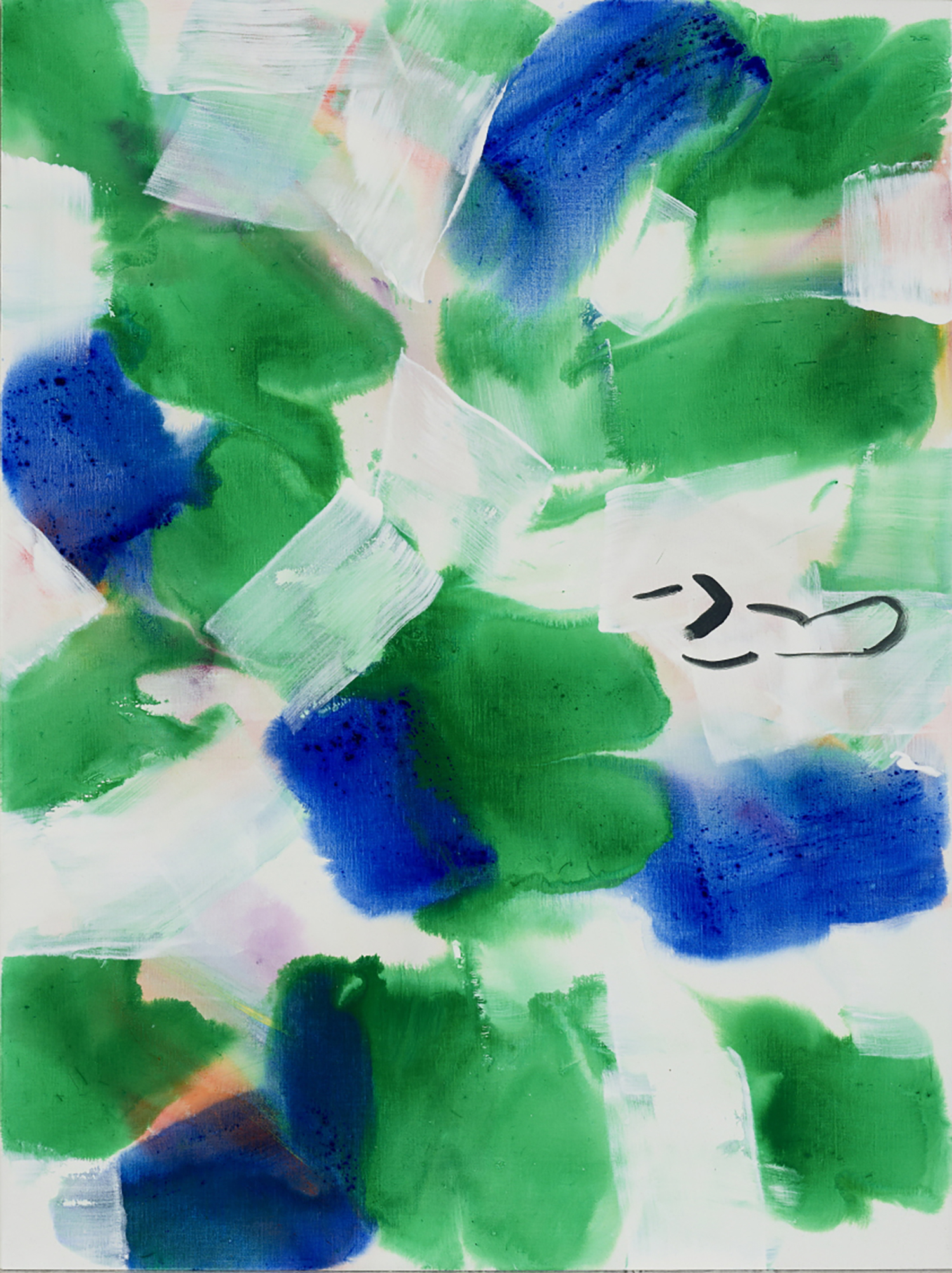
Lee Kang So, The Wind Blows-250109, acrylic paint on canvas, 130 × 97cm, 2025. Image courtesy of Daegu Art Museum

from left Untitled-75031 (1975, reproduction in 2025), Painting 78-1 (1977) ©Kim Hyerin
On Sep. 9, the Daegu Art Museum opened a large-scale retrospective of Lee Kang So (1943 –), titled ‘Lee Kang So Retrospective: Flowing Water, Ongoing Experiment’. As a central figure in the history of Korean contemporary art, Lee participated in groups such as Sincheje, AG, and École de Seoul. Featuring more than 130 works, the exhibition captures an artistic journey that has spanned over half a century through paintings, sculptures, printings, and archival materials.
The Korean title of the exhibition, Gok-su-ji-yu (play beside water flowing in curves), refers to an ancient East Asian tradition in which participants composed poems while floating cups of drink along a flowing stream. This act of letting one’s thoughts flow within the order of nature and sharing art reflects the attitude Lee has pursued throughout his life. His art does not seek to depict specific objects or narratives, but rather to channel the energies of nature through fluid brushstrokes and sculpture created by throwing clay—an act through which he embodies nature’s vitality.
The exhibition begins with Lee’s recent works. In the Serenity series (2016 –), he depicts a clear and transparent world stripped of impurities. In The Wind Blows (2022 –) series, vivid and intense colours convey the energy and vitality of nature as he perceives it. Having long embraced a monochromatic palette, Lee began to explore bolder colours such as green, blue, explaining that he was ‘seduced’ by colour.
Visitors are then led to fifty years back across the sites of experimental art. In a dim space appears Untitled-75031 (1975, reproduction in 2025), which presents the footprints, feathers, and traces left by a moving chicken. The Painting 78-1 (1977, reproduction in 2025), a video documenting the artist’s brushstrokes applied to a sheet of transparent glass before the camera, is also displayed. Created before the widespread use of colour television and the internet, the camcorder-recording The Painting 78-1 reframes painting not as a completed object but as an unfolding process, anticipating a new era of documentary media beyond simple experimentation.
The following sections trace Lee’s evolving practice in painting and sculpture from the 1980s to the present. In the early 1980s, his work was marked by abstract and impulsive brushwork. By the 1990s, simplified motifs such as ducks, boats, and houses emerged as symbols. Placed within the vast flow of nature, these motifs evoke the world’s scale and animate nature’s inherent force. Repeated consistently over decades, they have become core elements of his visual language. Through the Emptiness series (2009 –), Lee advanced toward a more restrained expression, revealing nature’s energy not through presence but through absence. Through this period, he explored the power of what arises within empty space, the potential for being itself. Meanwhile, his ongoing Becoming series, known as ‘sculpture one throws’ embodies the act of throwing clay as a ritual of release, capturing the essence of natural materials and force.
The exhibition reveals Lee’s persistent and experimental spirit across painting, sculpture, and experimental art. The last section features an archival section centred on the experimental art movements of the 1970s, including the Daegu Contemporary Art Festival, led by Lee himself, reopening a pivotal chapter in the emergence of contemporary art in Korea. The exhibition will be on show until Feb. 22, 2026.

0