SPACE October 2025 (No. 695)
‘Cross Critique’ was conceived to examine two projects under a related theme. It aims to serve as a space for critical dialogue between architects, where discussions can reveal the pressing issues and key topics in contemporary architectural practice.
Although multistorey car parks are often thought of as ‘cheap, easy-to-build’ buildings, the many considerations architects must keep in mind are anything but simple. They range from minimum dimensions and separated circulation for vehicles and pedestrians, to measures for climate change and exposure to outdoor air, to proactive responses to potential complaints, and, in the case of private facilities, even the need to ensure commercial viability. Architects are forced into a precarious balancing act between the possibilities and the weight of responsibility. In this Cross Critique, SPACE opens up these issues by observing two parking facilities built in sharply contrasting urban contexts – Jinju and Hanam – with Lee Jeonghoon (principal, JOHO Architecture), joining us to spark discussion.
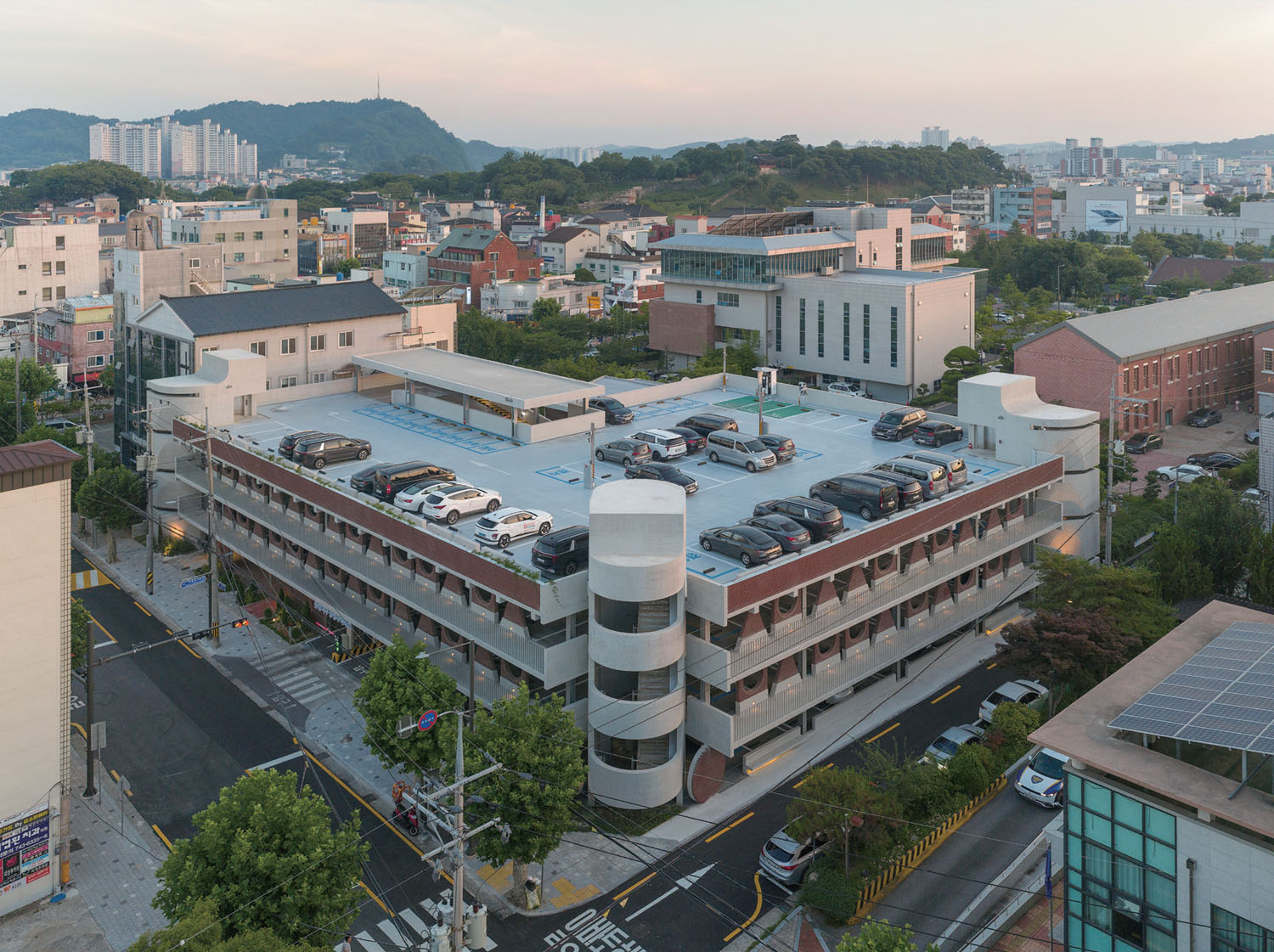
The staircase of Jungan Public Parking Lot (2025) by CoRe Architects
Jungan Public Parking Lot
Bang Yukyung (Bang): Over two days we visited Jinju and Hanam, looking at two contrasting types of parking structures. It would be good to begin the conversation by thinking about the strengths, potential, or questions prompted by each site. First, how did you view the Jungan Public Parking Lot (hereinafter Jinju Parking Lot) in Jinju?
Lee Jeonghoon (Lee): Walking through the Jinju Parking Lot, I was struck by the sense that is an experimental work. Perhaps this was possible because Jinju’s chief public architect and experts such as the design competition jurors, were involved, allowing for a more daring proposal to be realised. In particular, the pedestrian walkway built like a terrace behind the rear parking bays was striking, adopting a new approach I hadn’t seen before. In terms of urban design, too, it serves as a buffer zone, which felt like a clever solution. One concern, however, is that (in my experience) when pedestrian paths are exposed to outdoor air, rain can blow in or the floor can freeze, leading to accidents. Considering such potential issues and complaints, it couldn’t have been easy for the client to accept the design. Were there no requests for design changes?
U Zongxoo (U): So far, Jinju Parking Lot remains the public project that is closest to our original plans. The only changes were a slight adjustment of the number of parking spaces, rounding the end of the ramp to prevent vehicle collisions during turns, and adding polycarbonate panels to block views from neighbouring houses. We had worried about the appeal of the walkway, but the client actually liked it! (laugh) During the construction documents phase we waterproofed the walkway and installed trenches to prevent rainwater from entering the parking lot.
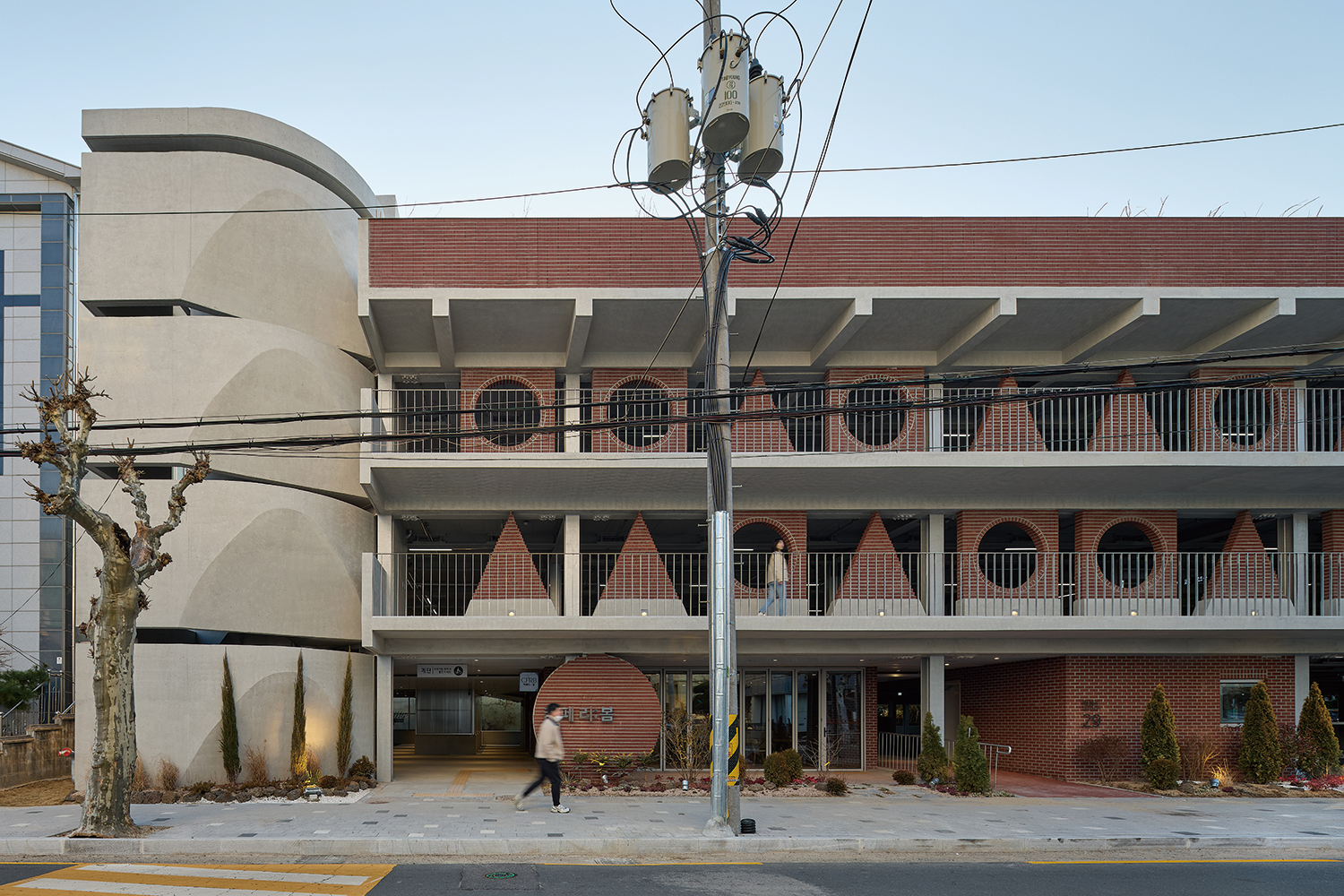
Yim Jinsoo (Yim): I read the project as a set of strategies that respond well to the parking programme—clearly separating servant and served spaces according to function, introducing object-like elements as a kind of pattern, and placing the staircases at the corners with differences in material and form. I also liked how the external pedestrian walkway created an additional visual layer, adding depth to the façade. In particular, the geometric brick wall stands out; it seems like an extension of the formal language you’ve demonstrated in other projects. Where did the inspiration come from?
Kim Vin (Kim): From the competition stage we were concerned about how such a large parking facility could avoid becoming an eyesore in the cityscape. So, while the vehicle barrier wall – legally required to be at least 60cm above the floor – was built in concrete, and we devised a way of stacking brick on top of it to screen the parked vehicles from view. With the Former Main Building of Baeyeong Elementary School and other brick buildings nearby, we felt brick would be a fitting material. To reduce waste, we inserted and removed bricks for ease of construction, and in the process, it naturally resolved itself into a simple geometric form.
Bang: In the photos the geometric brick wall felt massive, but in reality it has a kind of small-scale charm that blends well with the architectural structures of the neighbourhood. Perhaps it’s because it directly faces the brick walls and fences of nearby schools, multi-family buildings, and government offices, so the material felt contextually convincing. I also sensed that intentionally pulling the staircase away from the parking area to create various gaps that reveal the surroundings helped the building to harmonise with the neighbourhood.
U: We believed that this building shouldn’t be overpowering, yet at its junction with the street it had to stand out clearly and be immediately recognisable. The round concrete staircase became the project’s most sculptural element; we used metal formwork to create the slit openings. The construction was tricky, but we felt that small gaps were what would connect the building to the city.
Lee: I imagine that once the plants on the rooftop planters grow and cascade down to the first floor, the parking structure will evoke a tropical atmosphere, becoming a focal point of the local scenery. It will take time to settle, but once greenery flourishes, even a long walk along the pedestrian path will become part of a pleasant daily routine. In my experience, such an approach would be impossible in a private parking facility where every square metre is scrutinised for its monetary return, but this is the advantage of public architecture. The scale, materials, buffer zones, and landscaping all work together to give the project an urban warmth without feeling alien. If you didn’t know otherwise, you might think the building had been there for a decade. (laugh)
Bang: Seeing the café on the first floor buzzing with residents, it feels like the building is working as intended. If the aim was to revitalise the area through the parking facility, was there any thought of adding more neighbourhood living facilities?
U: The original competition brief made no mention of neighbourhood living facilities. We proposed the programme ourselves to bring vitality to this part of the old downtown. We actually expected it to disappear after the award, but to our surprise the client liked the space. I’ve heard it is currently operated by local senior citizens.
Kim: In public facilities, increasing commercial space can easily spark controversy over favoritism or complaints from surrounding merchants, so it’s a sensitive issue. It’s like when public bodies build rental housing and nearby landlords push back. Once you think about the relationships with residents, it becomes clear that the problem extends far beyond the parking tower itself.
Lee: Even so, there’s a sense of regret that had the first floor facing the street been lined with a mix of shops such as hair salons, convenience stores, or laundries, it would have created a much more vibrant street scene. Rather than shifting the burden of solving complaints and regulations onto the architect who proposes a new solution, shouldn’t the public sector in the preliminary planning phase think harder about street activation and take proactive measures?
Yim: The fact that you proposed a feature not mentioned in the competition brief is interesting. These days, when entering a design competition commissioned by a public client, one strategy is to deliberately break the rules or subtly twist ambiguous clauses to make the jury think twice. (laugh) I’ve even heard of cases where architects, wanting to design on their own terms, intentionally aim not to ‘win’ but simply to ‘get into the top five’.
Lee: From the standpoint of diversity, that logic makes sense. From a juror’s point of view, in a final evaluation you can’t select multiple entries that offer nearly identical solutions. On the other hand, preliminary planning is never perfect either. Because it inevitably steers design toward certain conditions and possibilities, I believe it’s also the public sector’s job to recognise and publicise more creative solutions when they appear. That requires choosing the right jury as well—as in Jinju’s case. (laugh)
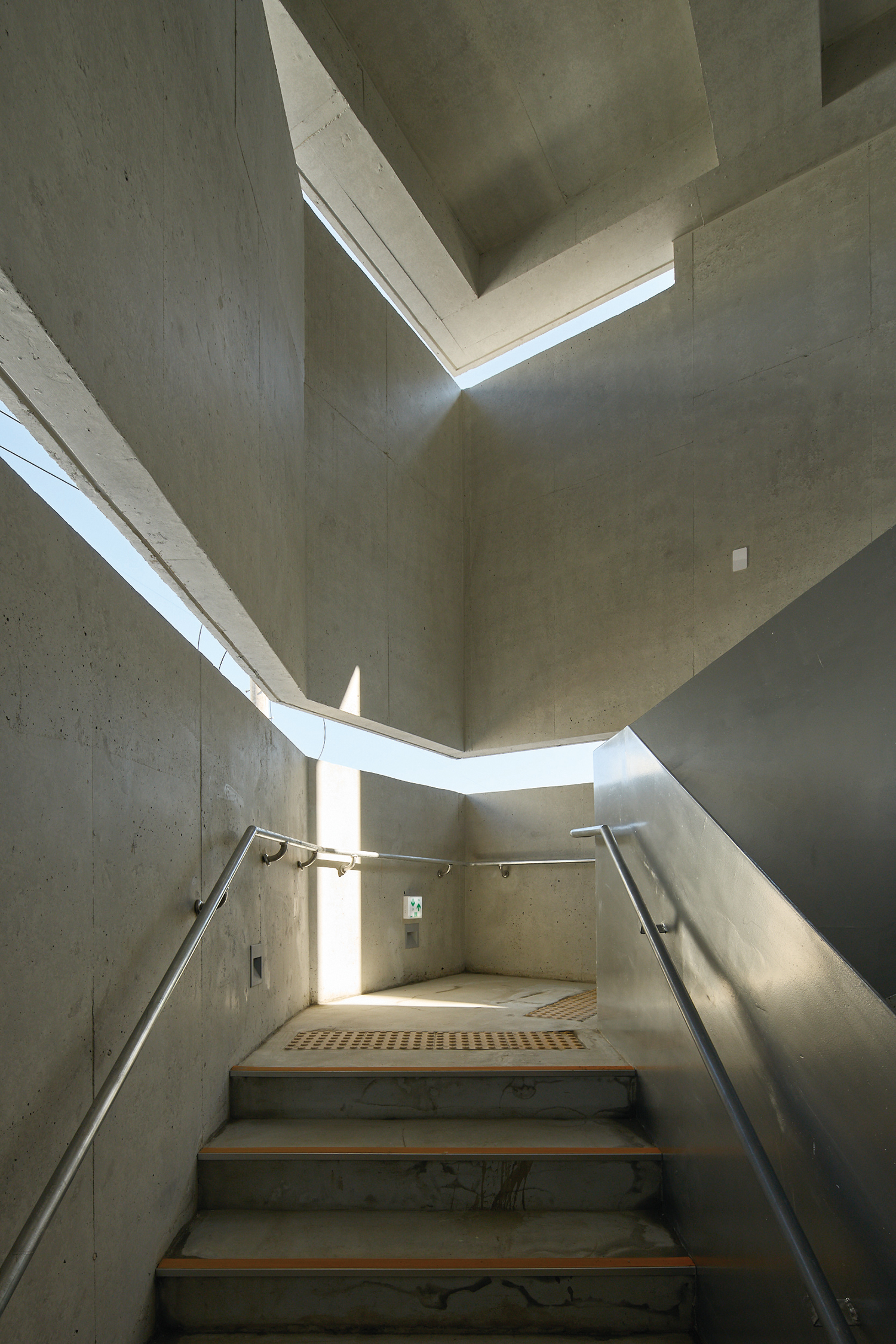
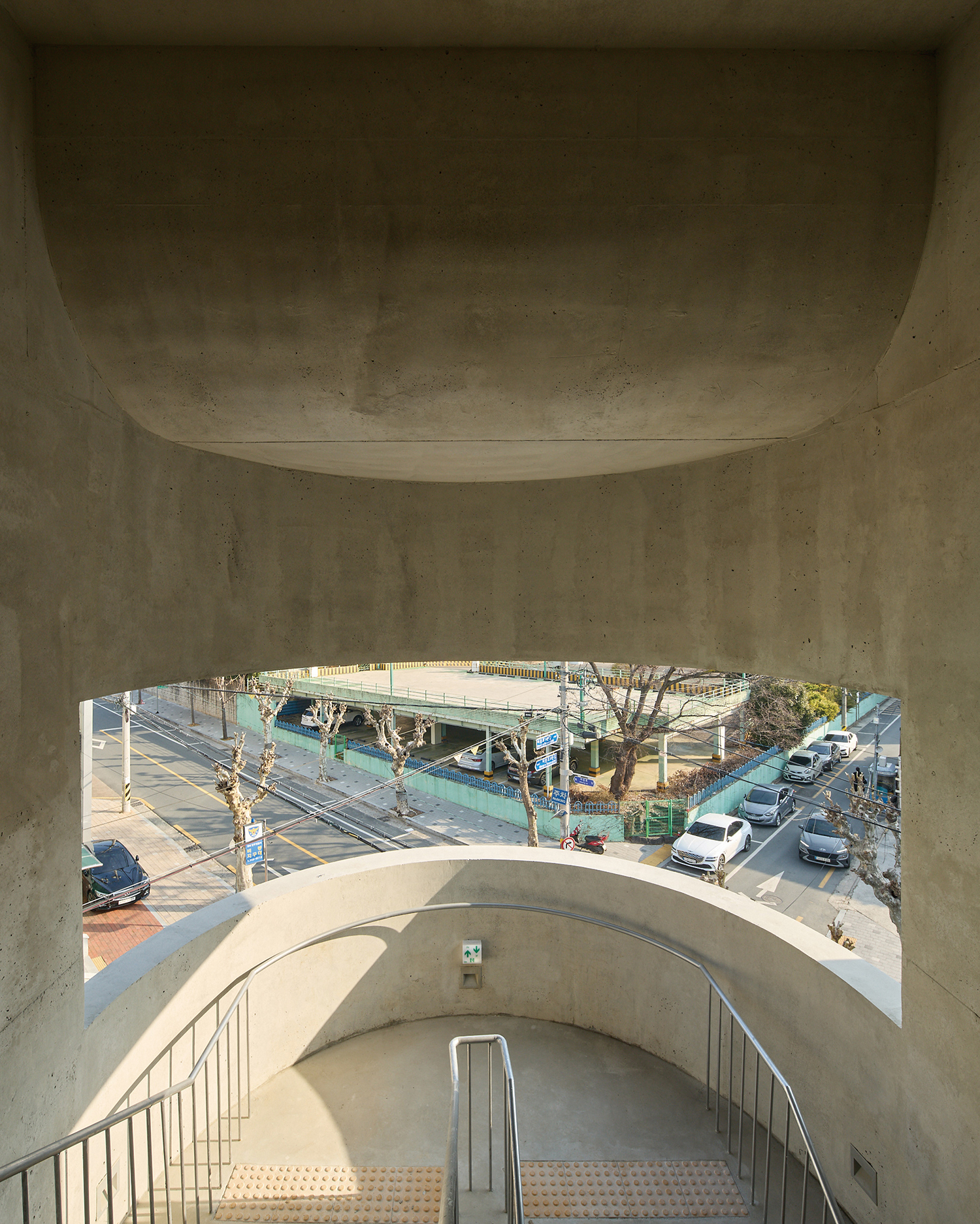
The staircase of Jungan Public Parking Lot (2025) by CoRe Architects
EIDEN Headquarters & Parking Tower
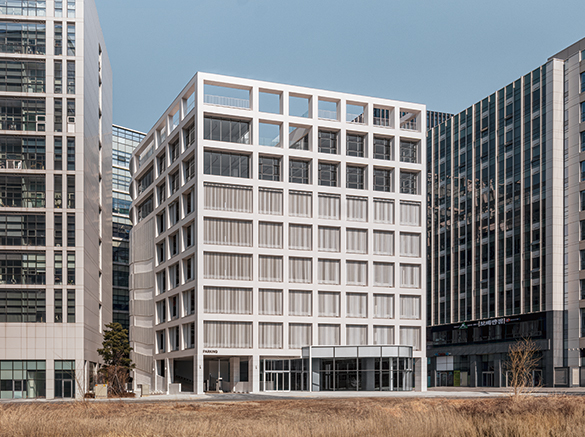
Bang: By contrast, the EIDEN Headquarters & Parking Tower (hereinafter Hanam Parking Tower) is a ‘parking facility integrated with an office building’ built in a new town. We should begin by noting the difference that it was built on a site surrounded by Knowledge Industry Centers.
Yim: When the client purchased the site, he showed us official documents from the city. In addition to the district unit plan enforcement rules, there was also a separate letter issued by Korea Land & Housing Corporation (LH). The regulations limited the building to land ratio to less than 70%, requiring at least 70% of the gross floor area to be designated for parking, and restricted commercial use to less than 30%. On top of that, the building height was capped at eight stories. In simple terms, it was a piece of land on which you couldn’t fully exploit the floor area ratio allowed under the district unit plan. But the application guidelines contained yet another condition: an arcade had to be installed along the first-floor frontage, and commercial uses above the second floor were only permitted if an entire floor was used exclusively. It was a rather tricky set of requirements.
U: To bring vehicles up to above-ground levels, ramps need to be connected, but requiring the commercial floors to be separated essentially means placing them on the top floors, doesn’t it? For private parking structures, like the Herma Parking Building in Yongin (2010) designed by Lee, it is crucial to consider how the building will operate differently depending on the programme configuration. Imposing such regulations in the district unit plan seems to act as a constraint that limits that kind of diversity.
Yim: This is where a clear difference emerges between public and private projects. In public design competitions, the conditions that must be reflected are organised and presented through preliminary planning. In private projects, however, you have to start by reviewing and reorganising a wide range of scattered conditions yourself. As a result, on the first floor we split the area 50:50 between parking space – including the vehicle access point – and neighbourhood living facilities. Because the ramp passes through the upper floors, we couldn’t place commercial facilities above the second floor. Because the basement also counted towards the gross floor area, allocating uses was difficult.
Lee: Inevitably, private parking facilities are driven by a commercial logic. In the case of Sejong, where I carried out the project, all private parking structures are restricted by district unit plan guidelines to use only two exterior colours (dark brown and light brown), with even the louver spacing specified. Because private developers were building parking lots indiscriminately, the city imposed strict regulations at the urban planning level. In the case of the Hanam Parking Tower, we can guess that the arcade on the first floor was mandated for similar reasons: since parking structures tend to be built right up against the street to maximise building coverage, such measures are taken to consider urban aesthetics and pedestrian comfort.
Yim: Hanam Parking Tower also serves as the headquarters for a coffee-machine distribution company, doubling as its showroom and offices, so we couldn’t ignore the company’s symbolic presence. Aside from the café on the first floor, concentrating the neighbourhood living facilities on the top floors (seventh and eighth) was possible precisely because it was a headquarters.
Lee: In the long lineage of parking structures built in Korea, Hanam Parking Tower stands out as a unique case, deviating from the typical logic of speculative-sale parking lots. It represents a special condition arising from the unusual situation of constructing a company headquarters on a parking site. In terms of conditions, the site was too small for a developer to purchase and successfully sell. Even if commercial space equivalent to the parking area had been added on the second floor, it would be difficult to secure a sufficient turning radius for vehicles. In Korea, commercial space above the first and second floors loses value and cannot generate profit. Because Hanam Parking Tower is a headquarters, it appears to have had more design freedom in terms of its façade, materials, and structural approach. Had it been a typical parking tower intended for commercial sale, the first and second floors would likely have been subdivided into small, fragmented spaces, resulting in a visually chaotic building.
Bang: In terms of area, the primary function is parking, but how did you intend to differentiate and express the two identities—the symbolic presence of the headquarters and the visibility of the parking tower?
Yim: From the outset, we treated spaces for cars and people with equal weighting. The façade of the space used as the headquarters was enclosed with transparent glass, while the parking area’s façade was left exposed to highlight the contrast between ‘closed and open’. At the same time, we intended to integrate the entire building with a strong grid system. On the main east façade there were originally no vertical louvers, but at review we were told to screen the cars from view, so we covered half, resulting in the present appearance.
Lee: Since the vehicle barrier wall was reduced to 60cm and inconspicuous wire handrails were installed on top, the grid could be emphasised on the façade. I think the strong grid provided a rational solution to the given constraints, but why specifically choose a grid pattern?
Yim: To be honest, the initial scheme was a completely different streamlined building. As we reduced the scale to cut costs, the proportions and spatial feeling changed. We decided it was better to redesign. At the time I was preparing a seminar on Brutalist architects such as Marcel Breuer, so I was fascinated by the completeness of design following a coherent module. (laugh) On this irregular corner lot we applied a 4.1 × 4.1m grid pattern based on an 8.2 × 4.1m structural module, and by moving the separated core of the initial scheme to the centre, the client’s requirements for parking count, storage area, and other conditions were met without strain. When we explained the revised design as ‘projecting the new town’s urban organisation – centred on a grid-like street pattern – onto the façade’, the client readily accepted it.
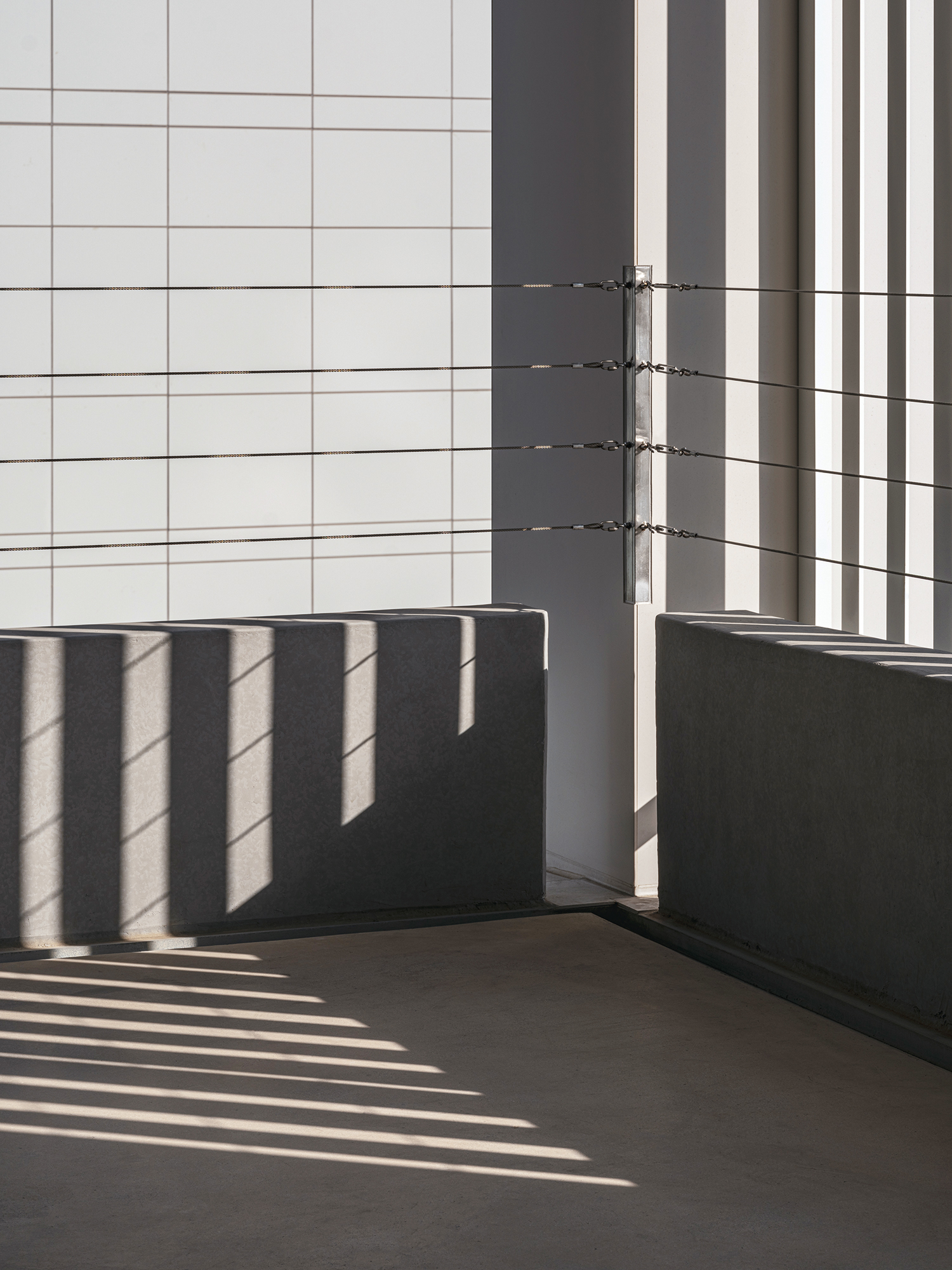
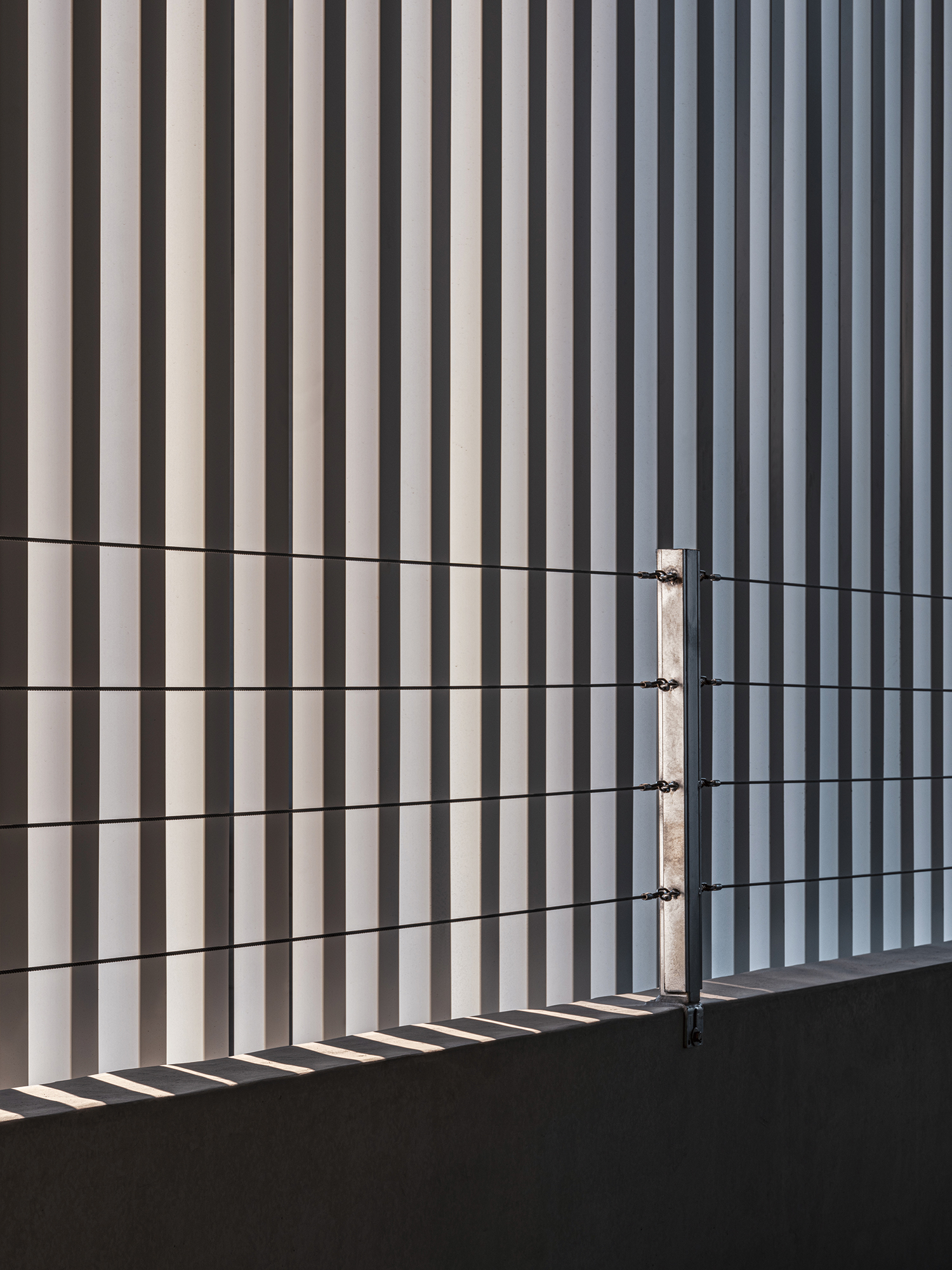
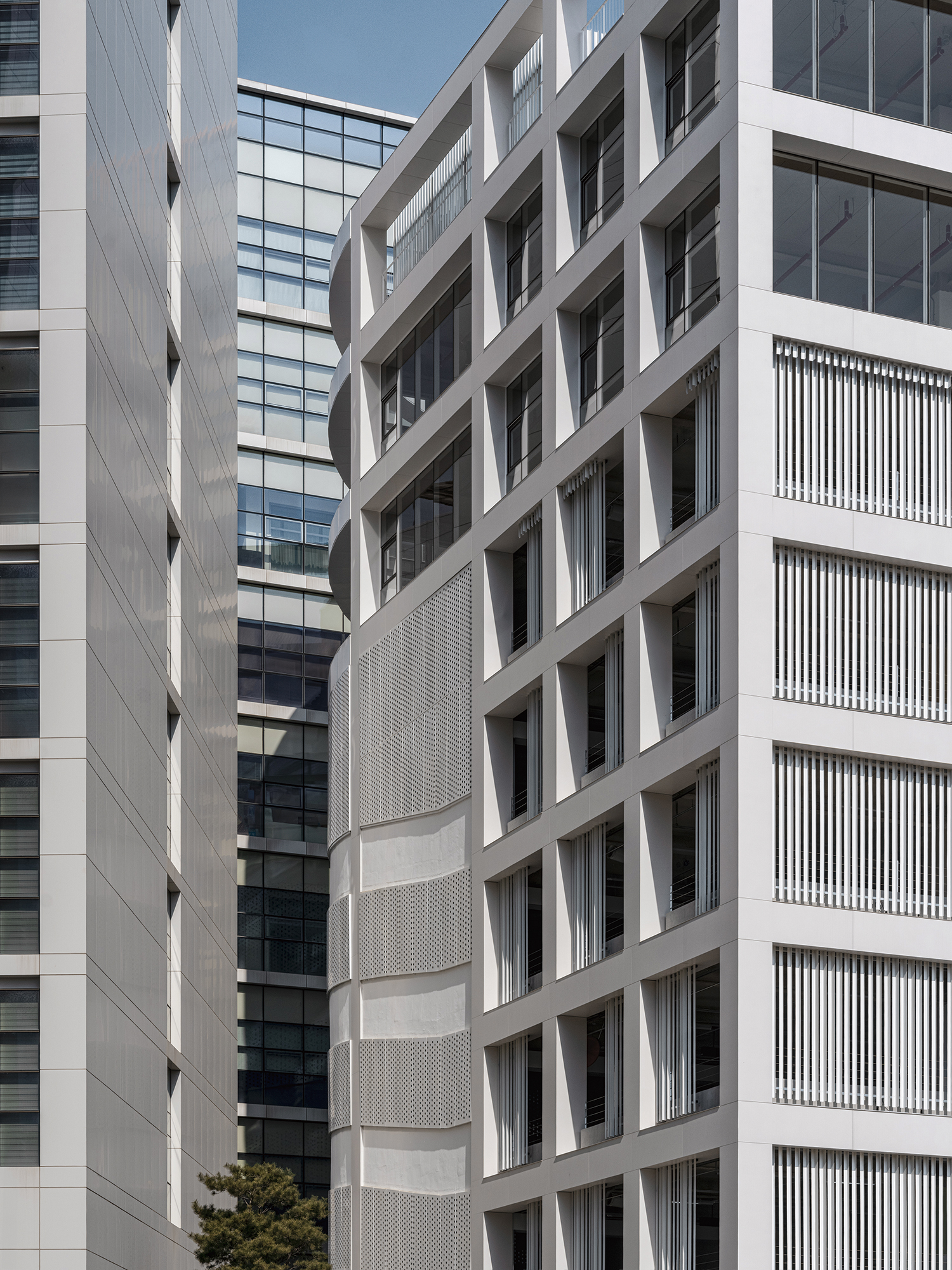
EIDEN Headquarters & Parking Tower (2025) by archromaky
Parking Facilities: Urban Planning and Publicness
Bang: In general, parking facilities tend to be regarded as buildings to be ‘built quickly and cheaply’. Even in design competitions, the construction budgets are typically set low, and as a result it is difficult to find approaches that truly consider ‘publicness’ as part of the urban landscape.
U: There had been remarks that, in the case of Jinju Parking Lot, it might take time for the external walkways to become fully functional within the city. But thinking the other way around, perhaps it’s because such spaces have never existed in this form before that they haven’t been used until now. From a user’s perspective, moving outside rather than inside the parking tower is preferable, and it would be even better if that moment were more pleasant. The concern we felt with parking structures was that these large masses stand insensitively, failing to harmonise with their surroundings. We wanted to show that even small changes could dramatically transform the cityscape.
Kim: Since resolving functional requirements such as drive-lane width, turning radius, and ramp slope are obvious challenges in a parking tower, we gave intense focus to what kind of experience we could offer people during those brief moments of moving in and out.
Yim: I agree that because a parking facility is open 24 hours a day to an unspecified public, it is a public asset that requires measures at the level of urban planning. In the private sector, the prevailing logic demands opening more than two-thirds of a site to the public; how and to what extent to interpret this publicness is a critical issue. There is also the aspect of a ‘visual public asset’ as a conspicuous building located in the city centre. Although the Hanam Parking Tower and Jinju Parking Lot may look different in terms of form and materials, we saw the architect’s awareness of publicness as a fundamentally shared issue.
Lee: Fundamentally, most Korean parking facilities carry inherent urban planning problems. In the United States, when laying out urban blocks, the grid defines sectors and it is considered essential to locate parking within walking distance inside each block. Parking towers are placed as the core element of the plan and commercial programmes expand outwards from there. In Korea, by contrast, zoning divides parcels into commercial, apartment, residential, and low-rise mixed-use; parking lots are placed in between the other three uses based solely on floor-area calculations. Without considering operation and profitability, such ambiguous parcels end up being functionally useless. From a private developer’s perspective, parking structures differ only in use classification, while construction costs are similar to those of ordinary buildings; aside from cladding and insulation, all codes such as the Fire Protection Act apply as they would to neighbourhood living facilities. In fact, parking ramps add to the unit cost.
Bang: To ensure profitability, couldn’t one consider enlarging the size of parking sites at the point of urban planning?
Lee: In Korea, parking facilities are almost never financially viable. Even after 20 – 30 years of operation, construction costs cannot be recouped, which forces developers to insert 20 – 30% neighbourhood living facilities space and sell off the lower floors to achieve profitability. Larger plots raise land prices and become harder to sell, a problem that is especially acute in provincial new towns. Essentially, any undeveloped vacant lot inside a new-town block is a parking-lot parcel. Large retailers or franchise restaurants requiring substantial parking occupy such lots, yet even they use only two or three floors for themselves and subdivide the first floor for tenants to boost returns. This is how the capitalised city reveals its underside.
Bang: The appearance of parking facilities in our cities is in fact monotonous. Perforated panels or louvers may be added to the exterior to hide the mess, but inside it remains dark and oppressive, like a chicken coop. Can this production pattern be changed?
Lee: I think a parking facility is a programme that attempts to reconcile inherently incompatible urban factors. It must offer wise solutions between commercial viability and publicness. This is why Jinju Parking Lot, which provides spatial and visual relief so that people feel comfortable, is an important precedent. Hanam Parking Tower also seems to be a good model of development that addresses required parking demand while taking the urban landscape into account.
U: In our case, the relatively modest scale made such experimentation possible. In a facility like the Ulsan KTX Parking Complex (2018) designed by Lee, which accommodates about 1,000 vehicles, vehicular flow outweighs pedestrian flow, requiring an approach closer to that of logistics systems.
Lee: Ulsan KTX Parking Complex is a mixed-use facility with four basement levels for parking, first to fifth floors above ground for neighbourhood living facilities, sixth to eighth floors again for parking, and the top ninth to tenth floors serving as a wedding hall. While low-floor retail users park underground, the design had to anticipate weekend scenarios where all above-ground parking was full and resolve the circulation for 1,000 cars entering and exiting simultaneously by separating ramps and access roads. It was a grueling process involving even a Traffic Impact Assessment Deliberation. (laugh) In fact, after designing numerous private parking structures, I have had to resolve a staggering range of complaints; from inadequate turning radii on undersized sites to frozen sprinklers in winter that required our staff to break ice, to slip accidents from rainwater that led users to confront the architect. Although I now accept it as part of my fate, I cannot deny that it becomes an obstacle to making experimental and challenging plans.
Bang: Throughout our discussion, I could clearly feel how much hardship you’ve gone through designing parking facilities. (laugh) Lastly, could you share your overall impressions after visiting the two parking facilities?
Lee: Parking facility design begins with urban planning. Because it is inherently placed at critical points in the flow of urban traffic, it inevitably has a public character. At that point, a philosophy and perspective on the kind of city you intend to create are essential to define the roles and functions of streets, commercial spaces, and parking at the urban planning level. In Korea, however, no specialised district unit plans exist for each new town. In that respect, I see symbolic meaning in the Jinju Parking Lot and the Hanam Parking Tower—one in terms of how it responds to the declining old downtowns of provincial small cities, and the other in terms of how it interprets new town urban regulations and commercial logic. Of course, in the latter case the combined nature of rental space and office headquarters is also important, but both have significance in having presented new architectural typologies. I believe there is also potential in forms that combine the two approaches. Ultimately, good cities and good architecture come from systems, institutions, and socially agreed-upon urban planning. To this end, architects capable of proposing concrete solutions need to participate actively and voice their opinions on urban planning processes such as district unit plans and urban master plans.
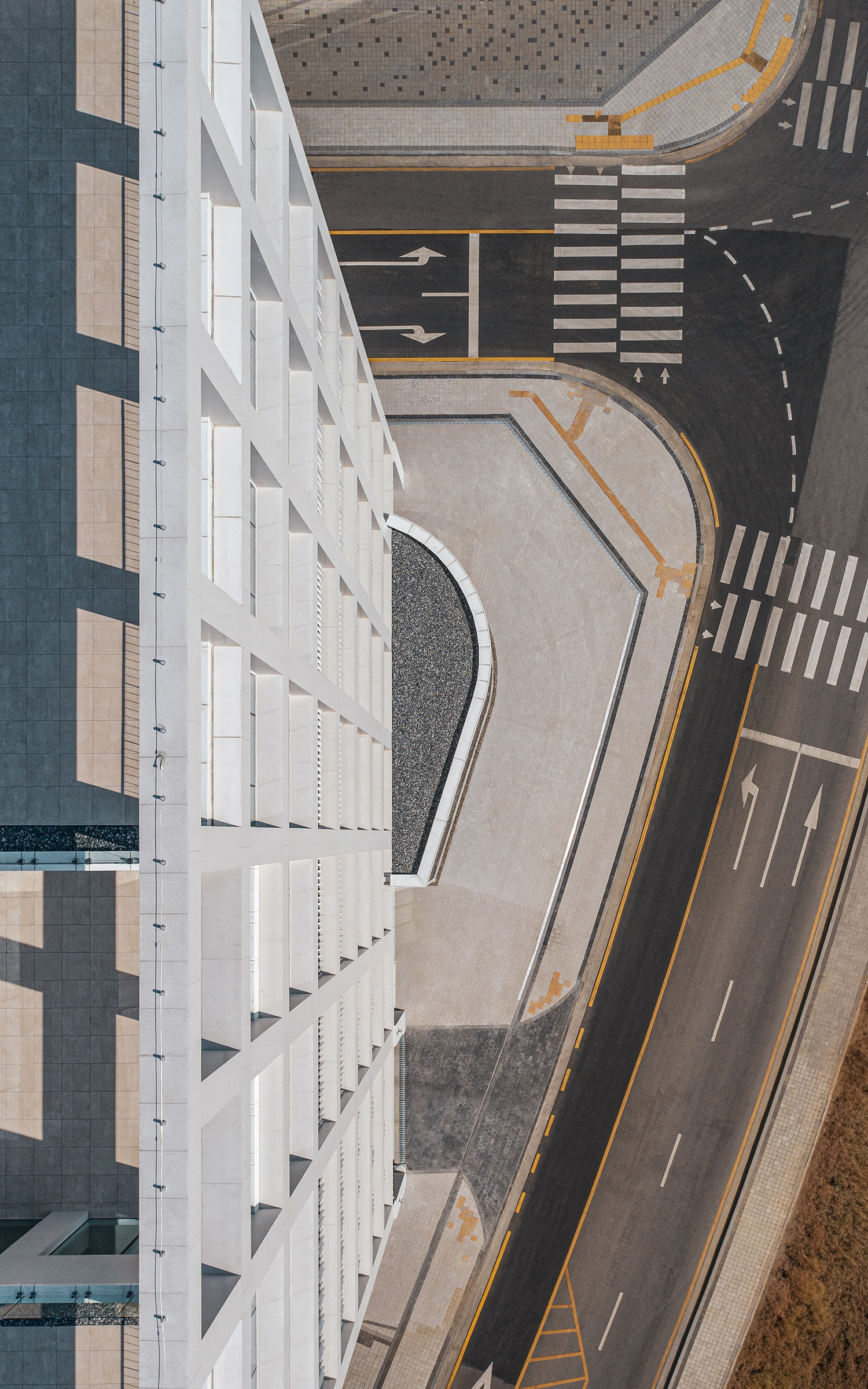
EIDEN Headquarters & Parking Tower (2025) by archromaky