[DIALOGUE] What are These Structural Experiments for? | Kim Jaekyung + JK-AR
photographed by
Roh Kyung
materials provided by
JK-AR
edited by
Kim Bokyoung
SPACE October 2025 (No. 695)
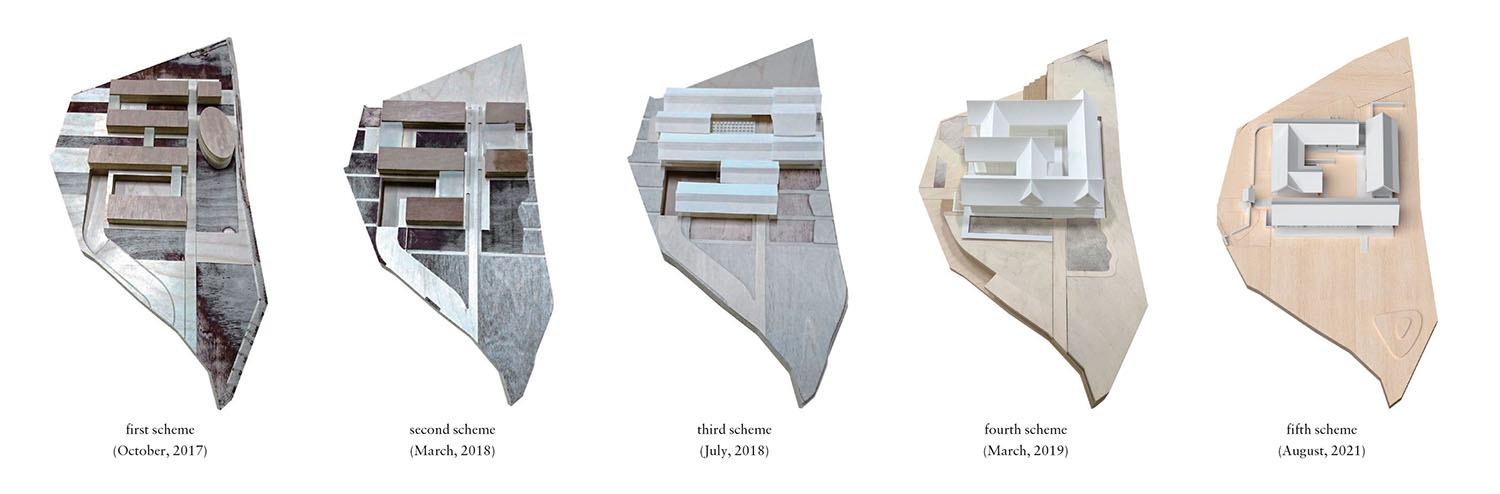
Timeline of the House for Rejuvenation
DIALOGUE Kim Jaekyung professor, Hanyang University × Hyundai Kim professor, Ewha Womans University × Yang Soo-in principal, Lifethings
An Exaggerated Reinterpretation of the Traditional Timber Joinery: The Pavilion of Contemplation
Kim Jaekyung: The Pavilion of Contemplation is one of the projects in the Tree Series on which I have been working consistently in recent years. Following the House of Three Trees (2018, covered in SPACE No. 620) and the Pavilion of Floating Lights (2022, covered in SPACE No. 662), the Pavilion of Contemplation is the next project in the series. By way of continuation, the next prospective project series I am developing is called the Isotropic Tree, which is more expandable and versatile than the Tree Series.
Before working on the Pavilion of Contemplation, I had used plywood, and this was my first time using CLT. To use plywood as a structural element, it needs to be 30mm-thickness or more. However, when they are the same thickness, plywood is more economical and lighter in weight than CLT. For the House of Three Trees and the Pavilion of Floating Lights, the framework members were assembled piece by piece on site, much like handcrafting. However, for the Pavilion of Contemplation, installation had to be completed in three days, so they were prefabricated as six pieces at the factory and assembled on site. The existing structure of the Tree Series presented challenges in terms of structural calculations and fire resistance, which the Isotropic Tree aims to address.
Hyundai Kim: It is interesting that materials such as CLT and plywood do not possess the same physical properties as classical and traditional wood. Traditional wood member is a linear material, whereas these materials are more like concrete-like wood in board form. Therefore, it seemed unnecessary to insist on using wood for the Tree Series structure. Just as wood is processed as boards, any number of other materials could be processed and used in the same way, right? In that respect, it reminds me of the transition in Western classical architecture from timber to stone constructions. Although the materials used shifted from timber to stone, traces of timber joinery remained. These have slightly degraded and evolved, resulting in the nstantiation of unnecessary formal expressions. However, there could have been someone who initially sparked controversy by questioning the need for such expressions in stone construction. In any case, just as this shift established a new norm and became inevitable across thousands of years, Kim Jaekyung seems to be exploring not so much rational structures, but how structures can appear inevitable when certain materials are used in certain ways.
Kim Jaekyung: That’s why I use wood, and that’s why I’m obsessed with joinery. If I had used different assembly methods, other materials might have been more suitable. However, to use the full properties of wood, joinery techniques such as gongpo (the bracket) are ultimately necessary. Timber can only withstand tension and compression when joined using these techniques.
Yang Soo-in: The Tree Series, comprising the House for Rejuvenation, the House of Three Trees, the Pavilion of Floating Lights, and the Pavilion of Contemplation, seems to present very different types of work. As Hyundai Kim mentioned, the projects in this series do not necessarily require timber structures. They could be made by cutting any planar materials to the same thickness. In fact, using plastic might be preferable from a structural point of view. Plastic is more ductile, isn’t it? Structurally speaking, these projects don’t seem to be exceedingly and inevitably tied to wood. They just happened to be made of wood. You mentioned the Isotropic Tree as a continuation of the Pavilion of Contemplation. If this project is realised, it could provide an opportunity to lay down the burden of using wood and free up experimentation with other materials.
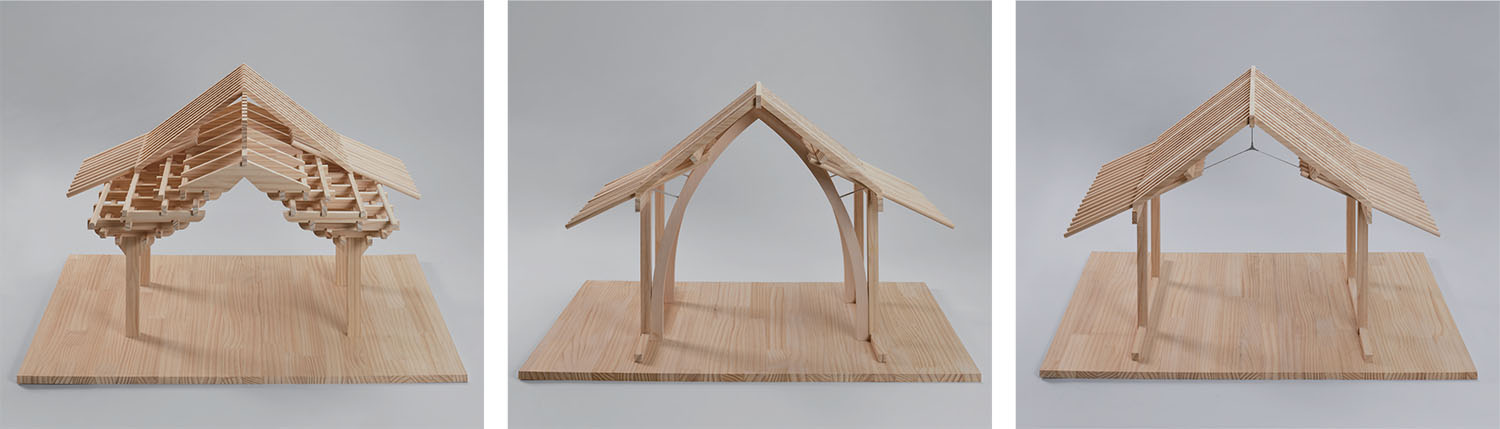
Models of the House for Rejuvenation: (from left) Hall of Contemplation, Hall of Meditation, Hall of Remedy
Kim Jaekyung: While the Tree Series might not be considered rational structures, they are certainly load-bearing structures. It’s also true that they don’t necessarily have to be framed using wood. One of the reasons I chose wood was for the emotional resonance I experienced with gongpo of East Asian timber architecture. Ultimately, I believe architecture should enable people to perceive beauty. I think people view the Tree Series positively because of the beauty they perceive in these joinery techniques. And while it was not structurally inevitable, the circumstances meant that wood was unavoidable. I began researching timber structures because of how easily wood can be processed, even in a laboratory setting. In fact, it was almost the only material we could work with there. Concrete requires pouring, steel demands welding, and its fabrication is difficult—not to mention the high cost. However, with timber, you can simply order sheets of plywood and cut them to size.
Yang Soo-in: Unlike the House of Three Trees or the Pavilion of Contemplation, which you built yourself, there’s not much you can do alone when it comes to constructing a ten-storey structure like the Isotropic Tree 4: High-Rise. That’s why I saw this project as a good opportunity to say goodbye to wood.
Kim Jaekyung: Still, I think I’ll continue working with timber. To expand upon this work further, we undoubtedly need more research and to develop more sophisticated technology, but in Korea, we can’t expect to find a wide variety of timber-related research or technology. I will have to conduct the research myself. Up until now, I have been able to do it alone, but if I want to start designing on a larger scale, I will need consultants. There are many issues to consider, such as fire safety, structural engineering, and prefabricated production. Consequently, I’m trying to develop an interest in other materials. Among them, concrete has caught my attention. There’s abundant research available on its application, and there are numerous consultants with whom I can collaborate. If I am to work on a larger scale, I believe concrete warrants consideration. If I were to work with concrete, it would probably be in a prefabricated style. This is not only because I favour the assembly process, but also because the industry trend is currently shifting towards minimising on-site labour costs.
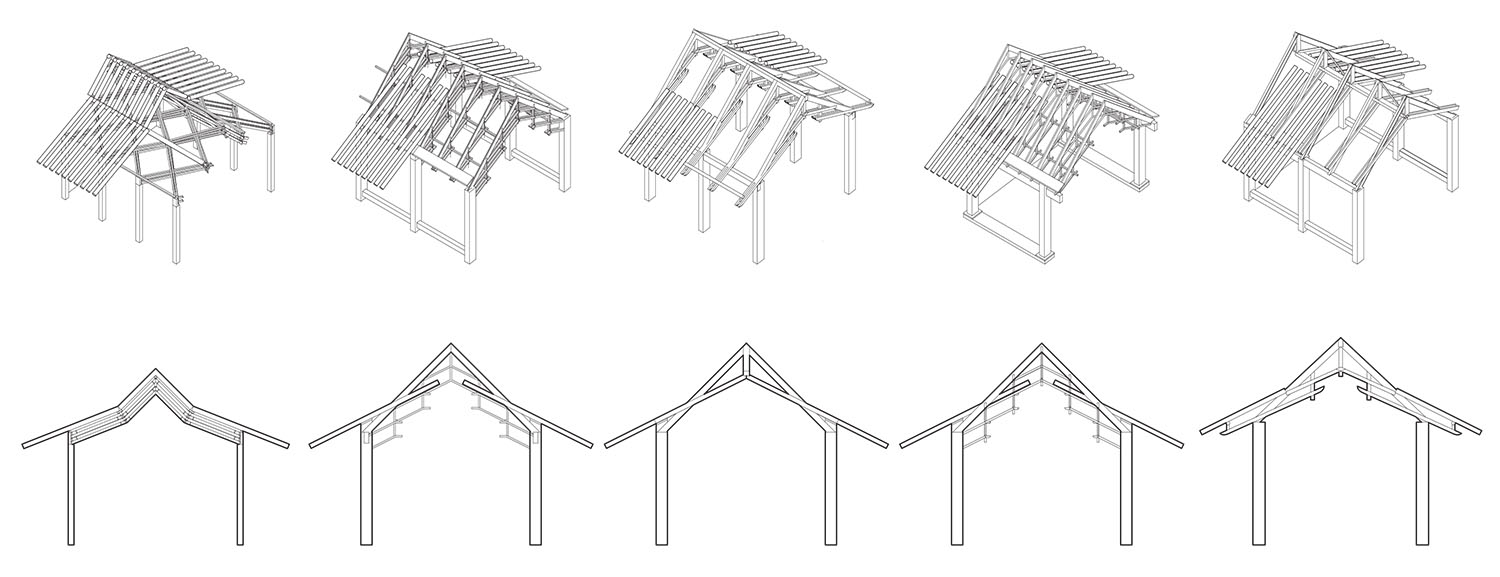
Unselected structural studies of the House for Rejuvenation
Building a Hanok Without Beams: The House for Rejuvenation
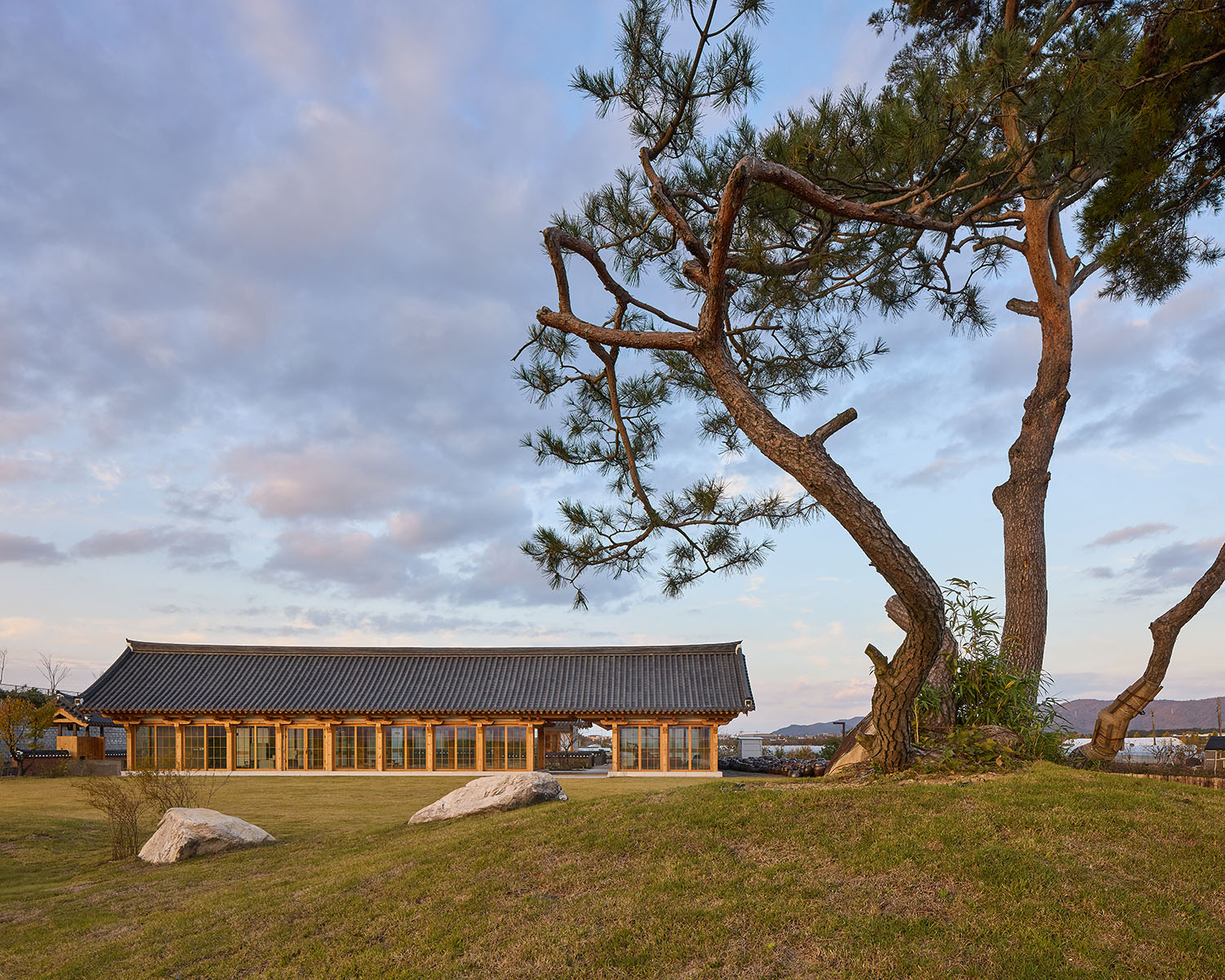
Kim Jaekyung: The House for Rejuvenation project began in 2017. As the design process took quite a long time, many changes were made to the design. When we started, we knew very little about timber structures, joinery techniques, East Asian timber architecture, or Korean traditional architecture. Initially, we approached it as if we were students with limited knowledge, creating multiple proposals. The current plan then emerged through subsequent study. In preparation for deliberations with the Korea Heritage Service and the Gyeongju City’s landscape committee around 2019, we met with a local architectural office that specialises in these matters. They said that the original systemic layout, conceived during the initial design process, would definitely present issues during the deliberations. Therefore, we compromised on the original plan and opted for a more traditional layout. We attended the meeting with a plan for an artificially sloped site featuring two-storey elevations, with the first floor exposed on the south side and the basement on the north side. This plan was rejected at the first deliberation meeting. Upon estimating the construction costs, we found that they were 50% higher than the target amount. We therefore reduced the size of the project to a single storey and simplified the design based on feedback from the deliberations. The layout was significantly influenced by external factors, such as this deliberation process. Although our intentions varied slightly at different stages, the idea of building a hanok without beams remained a constant.
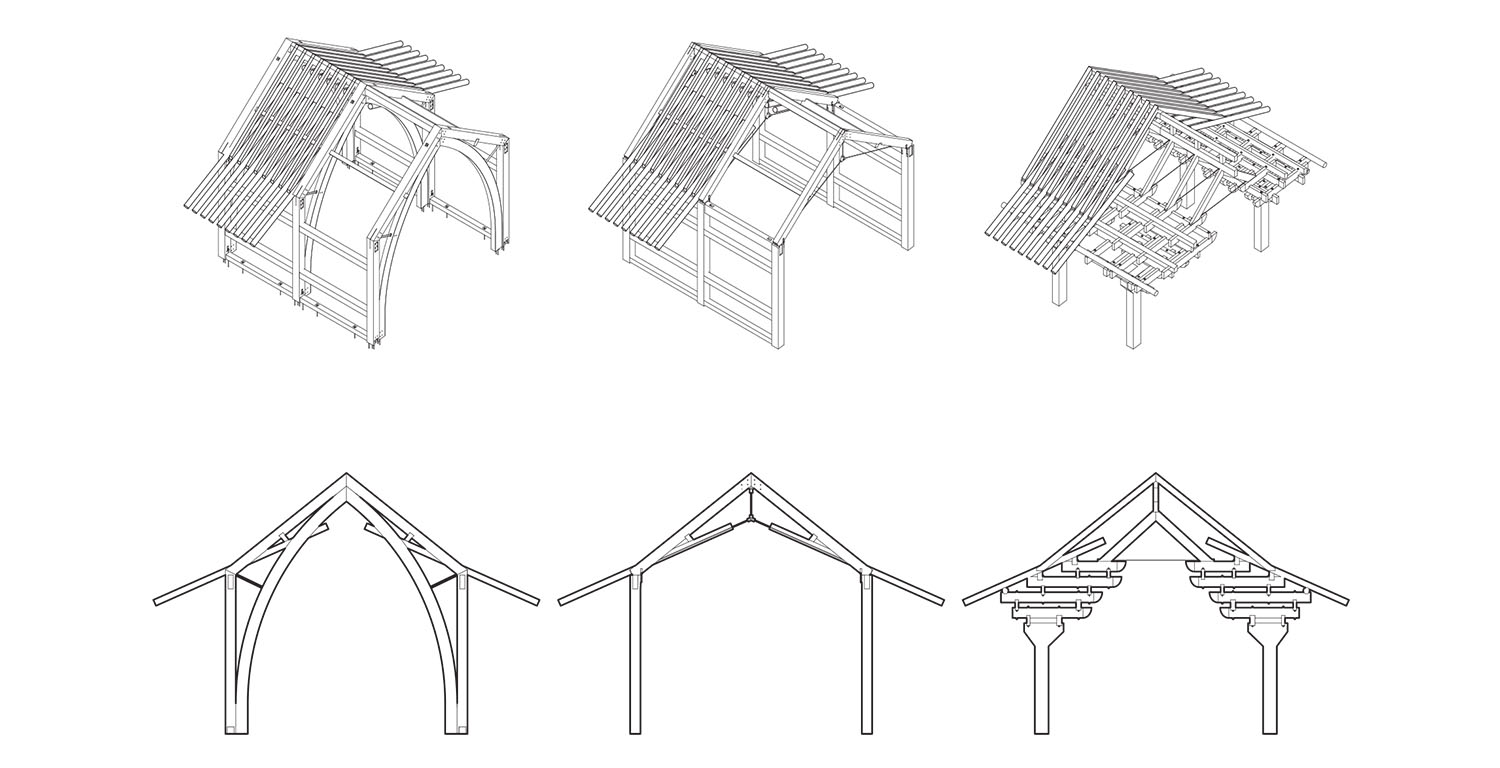
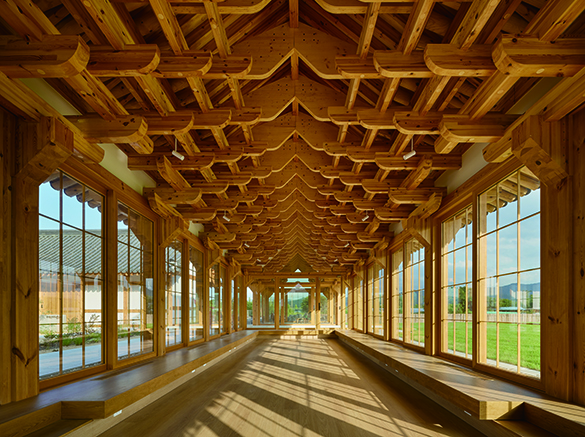
For the Hall of Contemplation, which is used as a tea room, we wanted to reinterpret the gongpo and pojak (the bracket system). There was a proposal that made an application of the slantinglyassembled projecting gongpo, and another that made an application of the stacked-type gongpo, as seen today. The initial design was not adopted because the slender structure could not support the load of a giwa roof (Korean tiled roof). Thicker framework members were required, as well as non-timber ones.
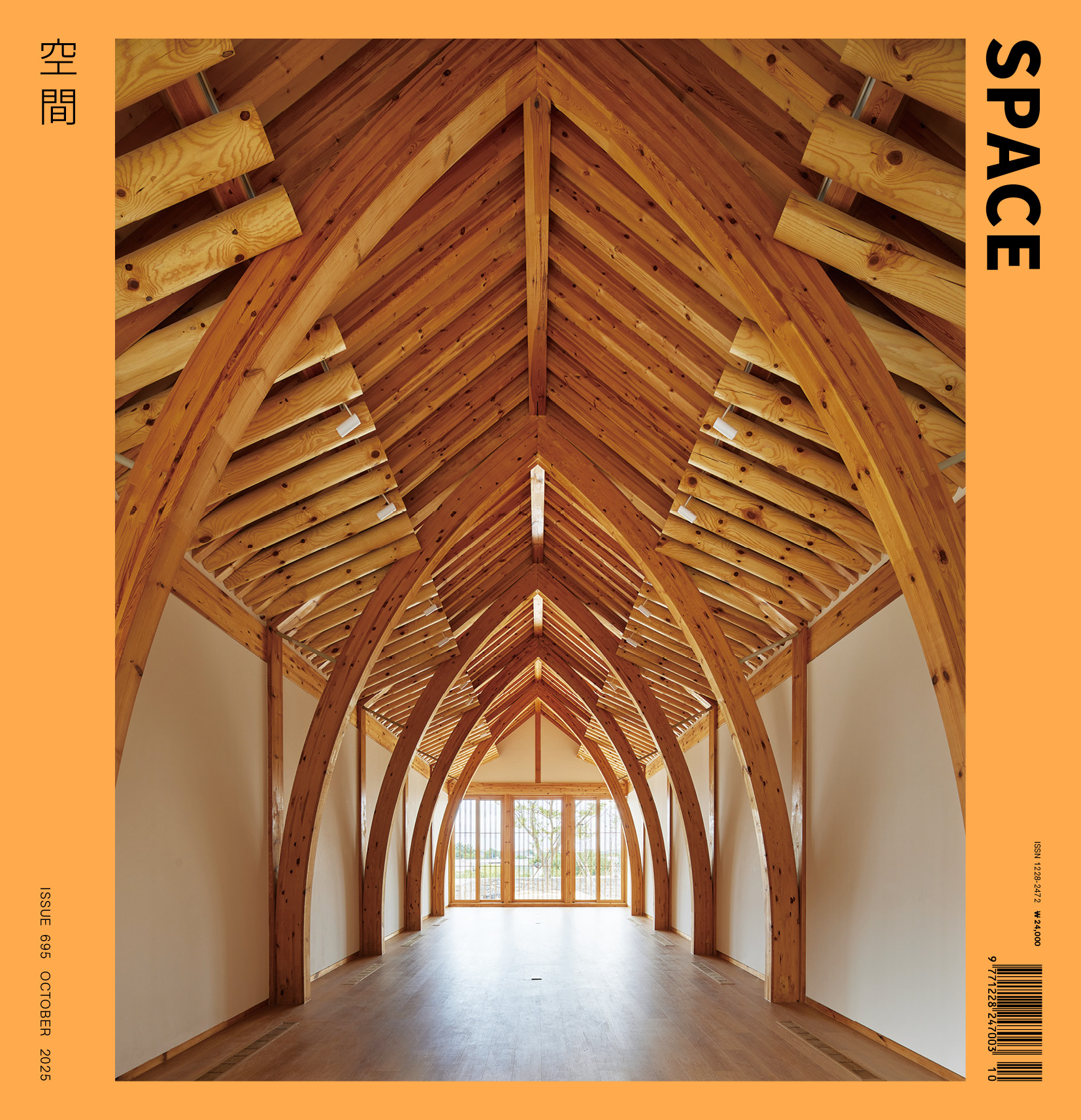
When starting with traditional hanok structures, many framework members are needed, and structural improvements become challenging. In the Hall of Meditation, which is a gallery, rafters were added to an A-type frame structure. Constructing a structure solely with rafters and without beams obviously results an unstable structure. Therefore, a means of supporting this tension was required. Looking at the initial application of rafters alone to the A-type frame, we can see that some framework members act as upper rafters and others as lower rafters. The upper rafters bear the entire roof load structurally, while the lower rafters, which are attached alongside them, form the roof curve. To stabilise this structure, bent beams were introduced to act as trusses.
The Hall of Remedy is an oriental clinic with the most rational structure. Like the Hall of Meditation, a gallery, it is based on an A-type frame structure supported by columns. As previously mentioned, removing the girders and then stacking rafters right away creates a highly unstable structure. In the Hall of Meditation, the compensating framework members were bent beams, whereas in the Hall of Remedy they were tension cables.
Hyundai Kim: The House for Rejuvenation has become more interesting due to the constraints of urban planning ordinances requiring a hanok-like exterior. Regardless of whether a more traditional approach was desired, the necessity to incorporate it makes these three buildings, each with a different timber structure, appear as if they are in a series showcasing distinct interpretations of tradition.
First, the Hall of Contemplation features exaggerated and repeated gongpo. While gongpo certainly serve a structural function, they appear to hold greater symbolic significance in relation to tradition than a structural role. The repetitive pattern of elements also conveys decorative ambitions. It is precisely these aspects that we should continue to explore in connection with the field of traditional architecture.
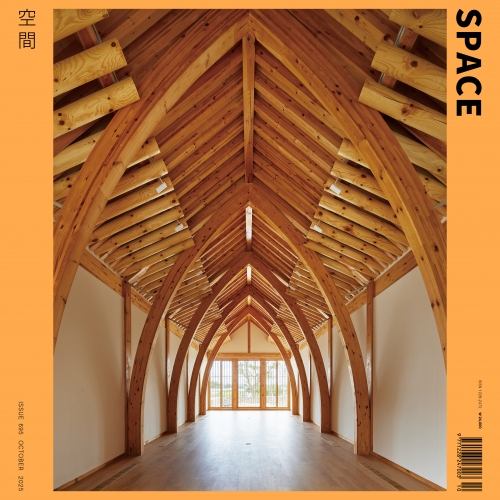
Second, the Hall of Meditation experimented with both structural form and tradition, by incorporating the pointed arch, an element unfamiliar to traditional timber structures. This process was akin to an experiment, with new elements being added one by one to see how much a sense of tradition could be retained.
Lastly, the Hall of Remedy shows the greatest removal of elements from the traditional timber structure. This included elements that would otherwise be considered essential to the structure. It felt like an experiment in gradually removing traditional elements to see how much traditionality could still be evoked. There was a sense of avant-garde reversal.
Selected structural studies of the House for Rejuvenation (from left Hall of Meditation, Hall of Remedy, Hall of Contemplation)
Kim Jaekyung: We started with the goal of building a hanok without beams, but we had no intention of reinterpreting traditional construction methods. Our focus was on creating the most rational structure possible.
Yang Soo-in: Yet the structures aren’t entirely rational. For example, take the framework member that supports the uppermost part of the gongpo in the Hall of Contemplation. It’s split into two parts. Was it really necessary to split the member and insert steel to join the two parts together? Furthermore, while the rest of the gongpo resemble linear materials, this part feels like a planar material, creating an awkward contrast.
Kim Jaekyung: Finishing the ceiling entirely stacking with the gongpo would have made the structural pattern monotonous, while simultaneously reducing the effective height of the interior. To avoid this, we applied a CLT member at the upper connection point. Due to the tensile resistance limitations of the CLT member used, it was divided into two sections centred on the middle and connected with a metal joint to ensure structural stability.
Yang Soo-in: Couldn’t the uppermost member be changed to an arch?
Kim Jaekyung: That might be possible. However, the goal was to create a structure that was rational ‘as much as possible’, rather than perfectly rational. Even if it isn’t perfectly rational in a structural sense, I believe a material can still be meaningful if it fulfils a structural role. I call that a decorative structure. Furthermore, although the Hall of Remedy and the Hall of Meditation were designed with the intention of creating rational structures, the Hall of Contemplation was inspired by the concept of the hanok’s gongpo—in terms of tradition.
The hanok is divided by the concept of kan (compartment), whereas given programmes such as an oriental clinic, a gallery, or a tea house require continuous spaces. To enhance the sense of space, we sought to explore new structural possibilities by combining the Western section-active structure with the Eastern stacked roof structure comprising beam members. In the pre-deliberation design phase, the Hall of Contemplation was planned as a two-storey building. The tea house reminded us of a nugak (pavilion), which is a highly symbolic hanok, and our aim was to convey that kind of metaphorical and poetic feeling. An artificial mound was created with circulation flowing from an entrance below to an ascent above. As the building faces south, it was intended to serve as the symbolic front—the main gate. This led us to seek motifs more directly from the traditional hanok. Designing solely as a stacked-type resulted in an unreasonable and illogical structure.
Hyundai Kim: All three buildings in the House for Rejuvenation appear to be informed by a syntactic (formalist) stance. Tectonic architecture, which utilises linear materials including timber structures, is often preoccupied with form. However, since a building cannot be completed by its framework alone, surfaces must be added eventually, resulting in the emergence of a kind of symbolic, communicative design elements. Therefore, architecture invariably possesses not only syntactic but also semantic aspects. At the House for Rejuvenation, the Hall of Contemplation offers its own interpretation of traditionality that
goes beyond structural and formal considerations. Where else in Kim Jaekyung’s work might semantic aspects be found besides the Hall of Contemplation?
Kim Jaekyung: Personally, I tend to resist the influence of external contexts when practising architecture. That’s why I have little interest in building in dense urban centres. Although I have worked on quite a few projects in the city, including the Hanyang University Architecture Building (2017), I have chosen not to publish or publicly disclose them for this very reason.
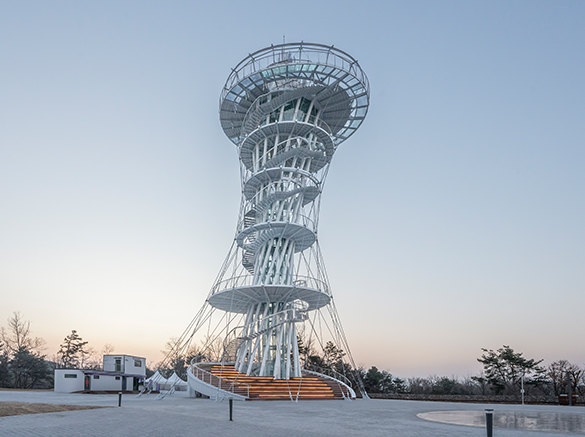
Essentially, I wanted to clarify the sense of subject of the inevitable tension between structure and material rather than adding another layer of meaning. While this is possible with small-scale projects, it became impossible to avoid considering the semantic aspects as our projects grew in size. The House for Rejuvenation in Gyeongju also began with the theme of structure – which is very simple and straightforward – but due to its location in a hanok district, the exterior had to take the form of a hanok building. Traditionality therefore became an additional consideration in this process. The Torch was designed with a cable structure for a number of reasons: it offers advantages in terms of wind load resistance, it makes the structure appear lighter, and numerous cable structures are located around the site and throughout Cheorwon. By using a cable structure, the hope that it could become a symbol of Cheorwon’s tourist industry.
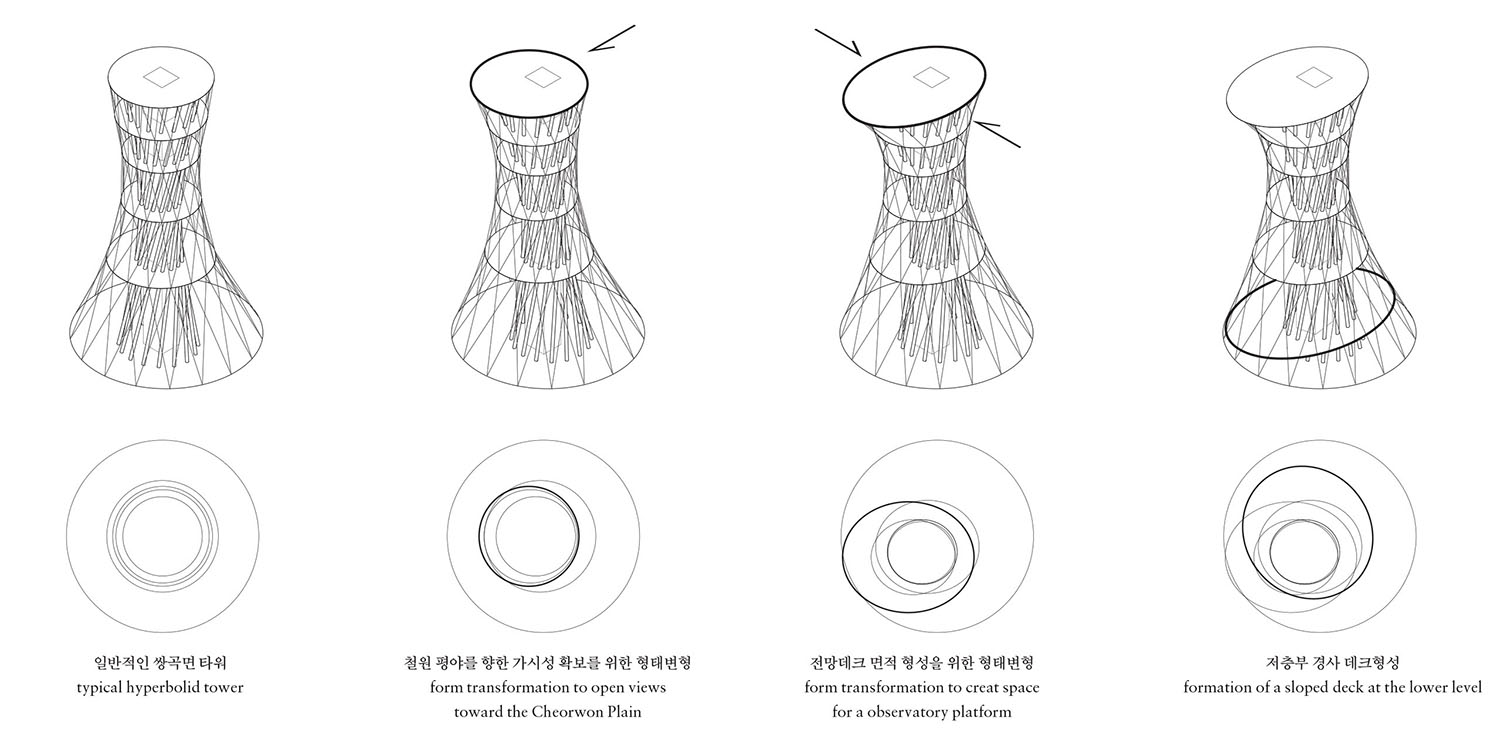
Form generation diagram of the Torch
Realising a Non-Symmetrical Hyperboloid Structure: The Torch
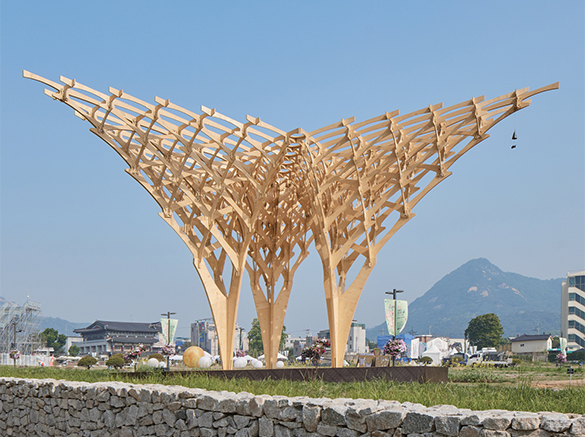
Kim Jaekyung: The most important element of observatory design is symbolism—in other words, creating a beautiful form that blends with its surroundings. Methods for achieving such forms include ‘form-making’ and ‘form-finding’. The former prioritises sculptural qualities over structural logic, while the latter involves discovering and refining form within structural principles. A prime example of the latter is Gaudi’s hanging chain model. The Torch occupies a middle ground between these two approaches. Its basic form was derived using a form-finding method, which involved establishing a cable hyperboloid structure. The form-making method was then applied in parallel to modify this form according to sculptural and functional requirements.
Yang Soo-in: As an architect, I find the Torch to be a far more innovative and interesting structure. There probably isn’t another building in Korea with such a structure. You can actually see the tensile structure on the outside. I doubt that many structures like this exist abroad either.
Kim Jaekyung: While there may be basic hyperboloid cable structures overseas, none of them change topologically like the Torch. Most of them are bilaterally symmetrical with identical cross-sections.
Yang Soo-in: The structure itself is truly marvellous. It’s marvellous, yet it also makes you wonder, ‘Why was it designed this way?’ In that sense, it’s extremely unique. Moreover, as the Torch was commissioned by a government institution, it probably had considerably more freedom in certain respects. While government commissions can involve numerous high-ranking officials and interested parties, leading to various opinions being heard for political reasons, fundamentally, no one really cares. As long as the project stays within budget and serves its purpose, you can do as you please.
Kim Jaekyung: That’s correct. In general, government institutions don’t interfere much with the design aspects, but they do pay close attention to the budget. However, the budget for the Torch increased unexpectedly this time. This appears to have been made possible by a change in the mayor of Cheorwon City. Cheorwon City wanted the observatory itself to become a symbol of the Cheorwon region, which made securing the increased budget possible.
Yang Soo-in: As it is an observatory, characterised by its impracticality, it doesn’t require a building envelope. This enables the project to reflect Kim Jaekyung’s artistic intentions more profoundly and demonstrate his architectural approach more clearly. There’s a deliberate approach to creating difficult problems and solving them wisely. Isn’t the value of this approach particularly in generating awe and sparkling curiosity?
Kim Jaekyung: I agree that it was a process of deliberately creating problems and then solving them. Suggesting these kinds of changes in form meant that I had a lot of homework to do. I should have refined the form in consultation with the structural engineer throughout the process. If I had opted for a more conventional approach, this process wouldn’t have been necessary. Creating a topologically changing structure meant that each joint angle was different. In order to fabricate it, I had to draw every single detail to figure it out. It was creating more hassle for myself than necessary. Nevertheless, I placed great personal significance on doing something different.
Hyundai Kim: The Torch is markedly different from your other projects. Other projects are more aggressive in their structural expressions. As Yang Soo-in mentioned, it feels as though problems that don’t necessarily need solving are posed, and then the process of solving them is worked through. Conversely, the Torch is highly functional. It’s also structurally rational. Starting from basic geometric forms, the height and proportions were adjusted by taking into account the observatory’s orientation, the context of the surrounding site, and the floor heights needed for each level and stair access. This process feels quite rational. The sense of awe or monumentality experienced at The Torch seems to be a result of this rational approach.
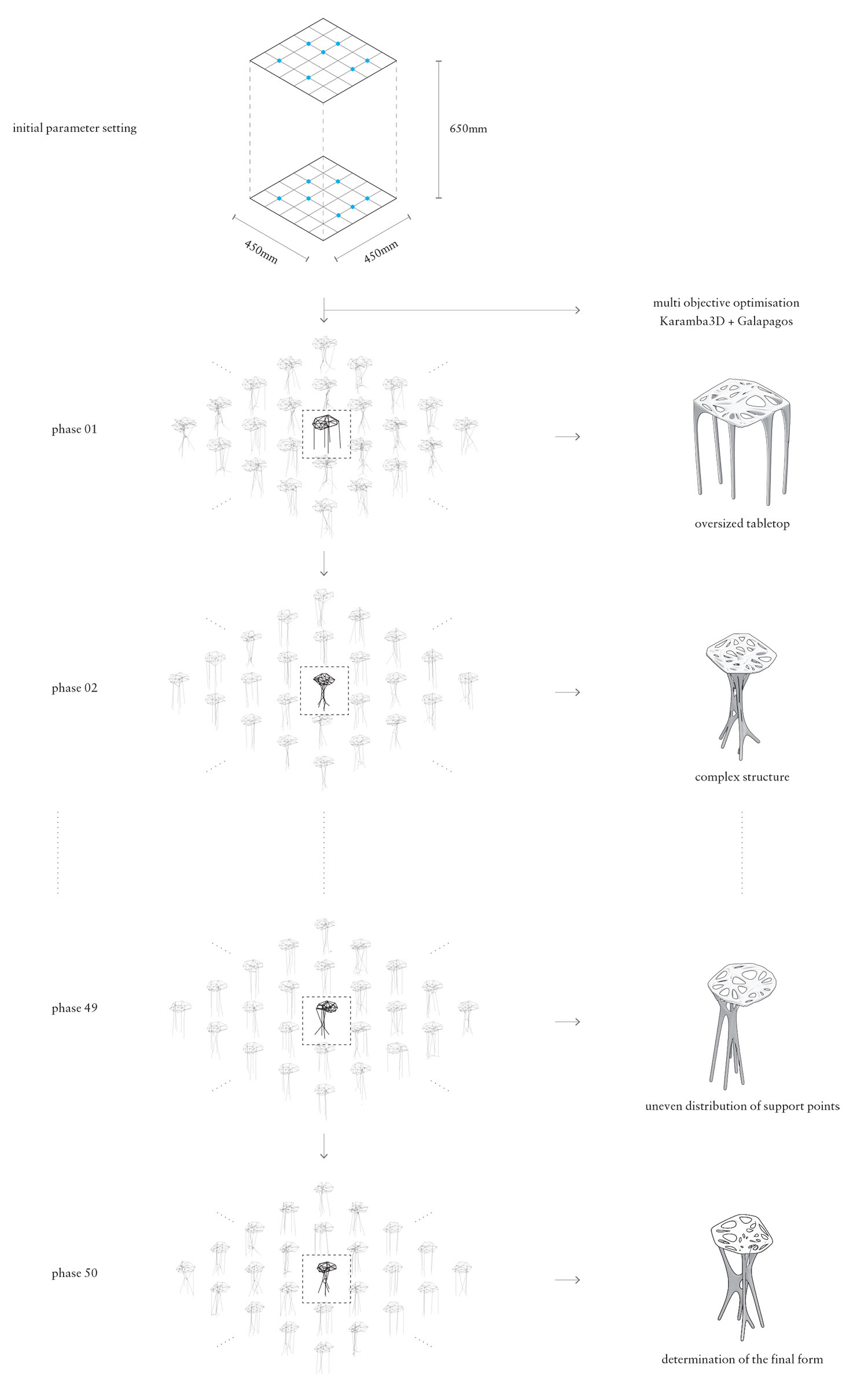
Design process of the Alien Table
Realising an Organic Architectural Structure: The Alien Table
Kim Jaekyung: The Alien Table is a project that I worked on using concrete while researching wood and concrete under the theme tectonic in 2015. While I could process wood quickly and easily myself, producing concrete was challenging. It took me a year to make just this one table. Using structural optimisation software programmes, I tested a design approach in which human intervention was solely for aesthetic purposes. Using Grasshopper’s plug-in Galapagos and Karamba3D, I generated forms by entering the height and the number of points above and below as the only variables. The Galapagos then produced countless forms, while the Karamba3D performed a structural analysis of these and recommended a few of the most stable ones. I then added more variables and repeated this process until I had selected the final form. Although I considered using 3D printing to realise this chosen form, 3D-printed concrete could not serve as the structural frame. Fundamentally, the method of stacking used in 3D printing makes structures highly vulnerable to horizontal loads and tension. While it would have been possible to produce a table of this scale using this method, I wanted to experiment with a construction process that could create a genuine structural system suitable for long-term use at a building scale. Therefore, I took the opposite approach. I created a formwork via 3D printing, poured concrete into it, and then cured it. At the time, I anticipated that 3D-printed moulds would become affordable within about ten years. The 3D-printed formwork, which was made from silica, was broken up with a hammer after curing.
Hyundai Kim: You mentioned that you selected forms based solely on their aesthetic qualities. What were the criteria for selecting one form over another from an aesthetic perspective?
Kim Jaekyung: From a practical point of view, it was important to choose a form that could be cast in concrete. Concrete is inherently viscous, and its strength decreases as its viscosity decreases. This made placing complex, organic forms difficult. Therefore, in collaboration with Bae Sungchul (professor, Hangyang University), who specialises in concrete materials, we used UHPC (ultra-high-performance concrete) to develop a mixture that retained rigidity while approximating the viscosity of water. After confirming how complex a form could be cast, we selected the most challenging form that could definitely be cast. Although it is possible to create multiple mock-ups with timber, producing the 3D-printed formwork for concrete cost 7 to 8 million KRW. Therefore, it was very important to select one feasible form.
Hyundai Kim: I asked you about the selection criteria from a formal-aesthetic perspective because the Alien Table appeared to differ significantly from other projects in terms of its aesthetic qualities. Despite their highly complex structures, the other projects strive for a certain structural clarity. However, the Alien Table seems to embrace ambiguity, probably due to its algorithmic origin. The points at which the structures meet also shift as they rise. Allow me to draw a comparison in terms of style: while other projects feel as though they’re establishing an order akin to the Gothic, the Alien Table feels as though it’s transitioning towards the Baroque. Indeed, while both share a framework vocabulary, their sense of order differs. I wonder which aligns more closely with Kim Jaekyung’s interests?
Kim Jaekyung: For me, the most important thing in architecture is ultimately ‘beauty’. That beauty only emerges when materials and structures are brought together. Materials go beyond their basic physical properties to create an order within the structure, and it is this order that defines the space. Architecture always requires certain order. Structural stability and spatial resonance are made possible through this order. When materials, structures, and order are in harmony, architecture transcends mere construction to become a sculptural and spatial beauty.
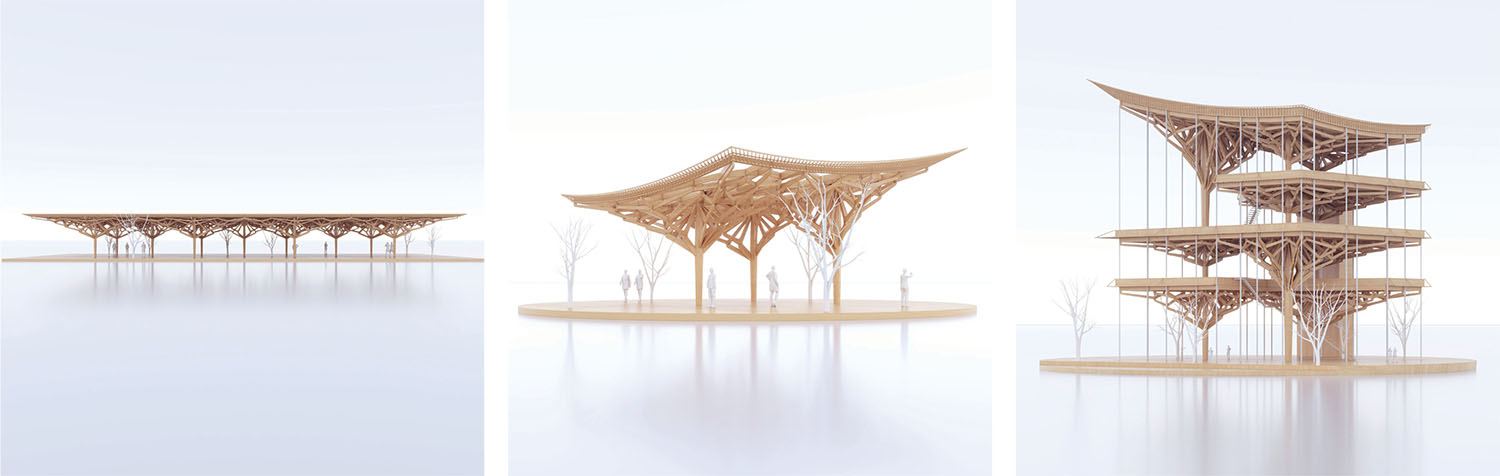
(from left) Rendered images of Isotropic Tree 1: Horizontal Expansion, Isotropic Tree 2: Pavilion, Isotropic Tree 3: Mid-Rise
The Marvel; A Moment Where a Sense of Awe and Curiosity Intersect
Hyundai Kim: Kim Jaekyung seems to be quite interested in tectonics in general. Louis Kahn was also deeply interested in tectonics, especially steel structures, right? Although he ultimately worked with concrete for practical reasons, at the Richards Medical Research Laboratories (1961), he used concrete in a manner that was almost tectonic. For instance, he used methods similar to those used in joinery. Similarly, it is fascinating to see how Kim Jaekyung finds his own solutions within the given circumstances of each project, based on his interest in tectonics.
Yang Soo-in: What makes Kim Jaekyung’s structures so intriguing is the particular emphasis placed on the roofs and vertical structures. Meanwhile, the envelope plays almost no role whatsoever.
Kim Jaekyung: That’s correct. In this design, thickening the envelope for functional reasons could obscure the design intent. In timber structures, the timber itself provides sufficient insulation performance, meaning the structure can be left exposed externally. Exposing the structure externally and inserting the envelope between the timber structure significantly diminishes the importance of the envelope, enabling the structure itself to form the elevation. Consider the Torch, where the envelope only exists on the upper floor for functional reasons. To prevent the structure from becoming blocked from view and to avoid it becoming a part of structural system, curtain walls were installed inside the columns. However, when constructing buildings in Seoul, a functional envelope will likely be required. I have yet to find an answer as to how the current design approach could be applied in such cases.
Yang Soo-in: Recently, due to environmental considerations, the envelope has been playing an increasingly significant role in most buildings. To put it very bluntly, it’s a case of erecting columns to create a structural frame, and the envelope handles all the remaining functions. It insulates, it is waterproof, sometimes it moves, and sometimes it incorporates LEDs to serve as a media surface. Conversely, Kim Jaekyung’s structures seem somewhat detached from the context of today’s architecture. It’s difficult to discuss the eco-friendly aspects or efficiency of timber structures here. Kim Jaekyung’s timber structures are rather inefficient and expressive. Then, what kind of meaning does this approach to structure hold today, and what contribution does it make?
Kim Jaekyung: I’ve never considered it from that perspective. It’s simply the result of pursuing my interests and desires, one thing at a time. However, there is this: I aspire to be someone who provides stimulation.
Yang Soo-in: If I were to imagine myself as Kim Jaekyung and had to give a hypothetical answer, I would say, ‘More is more.’ Personally, I favour architecture that evokes ‘wonder’. Wonder encompasses both the curiosity of ‘How on earth is that standing?’ and a sense of awe. I kept that in mind when designing the Park Maintenance Office (2017) in Yongsan. I believe wonder is one of the values of Kim Jaekyung’s architecture. Don’t you feel that sense of marvellous when you see the Tree Series or the Torch? They also make you wonder, ‘Why on earth would he do something like this?’ (laugh) I see that emotional value as being more significant than any numerical value.
Kim Jaekyung: Exactly. During reviews, I’m often asked, ‘Why must you build it in this way? Why must you place this tree right in the centre?’ Whenever anybody asks me such questions, it is difficult to answer them. The person asking and I approach architecture from entirely different perspectives.
Yang Soo-in: The duty of an architect involves more than just constructing buildings. It also encompasses the act of practising architecture itself. Ultimately, anyone hoping to practise architecture must confront such questions at some point. Only by grappling with these questions and finding their own answers can they properly position themselves within the long history of architecture, whether at its centre or on its periphery. Sometimes you do this yourself; sometimes others do it for you. Sometimes it happens posthumously. Therefore, I don’t see it as a problem if you don’t know the answer now. After undertaking more projects, you may be able to find your position. Nevertheless, the most significant question is ‘Why do I do this?’, so it would be worthwhile considering it.
Kim Jaekyung: Inevitable tension; this seems to have been my primary goal in architecture. In his essay ‘Monumentality’ (1944), Louis Kahn argues that structures are losing their innovative edge due to safety factors and standardisation. Consequently, architects lose their innovative sensibility or spirit of challenge. Therefore, architects must actively engage with and challenge structures and technologies. I understood monumentality to embody this attitude. However, when I observe today’s architecture, I notice that structure and skin are increasingly becoming separate entities. Solving insulation issues through the skin has become commonplace, and sometimes the building’s form is created solely through the skin. My conception of good architecture differs from this approach. I believe that good architecture is born from the form and the wonder of the space created when structure and materials are combined in a compelling relationship. That is the architecture of inevitable tension. My study of classical East Asian architecture was also motivated by the belief that such elements are present in East Asian timber architecture.
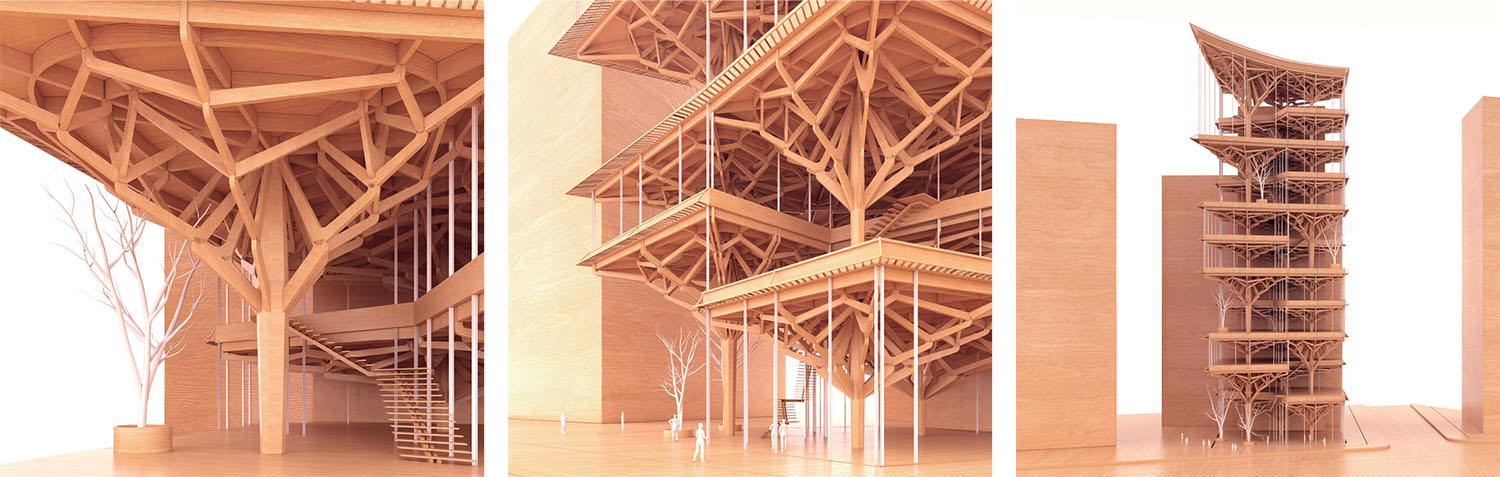
Rendered images of Isotropic Tree 4: High-Rise
Yang Soo-in: Kim Jaekyung’s architecture seems to pursue something distinct from monumentality. The pyramids, for example, are monumental, yet they lack the structural surprises found in Kim Jaekyung’s architecture. They appear overly stable to anyone looking at them. While it is possible for something to be both sculpturally beautiful and monumental, the sensation evoked by Kim Jaekyung’s architecture is different. Kim Jaekyung’s architecture draws the eye not simply because it is sculpturally beautiful or monumental. Rather, it’s the emotion felt when a sense of awe, curiosity, and questions – sensations achievable only through a unique structural technique – all come together.
Kim Jaekyung: I still can’t define that emotion in a single word, so it seems that I have appropriated Louis Kahn’s notion of monumentality. Come to think of it, monumentality seems closer to national symbolism, which might not quite align with what I aspire to. Ultimately, what I desire is the fleeting feeling of wondering, ‘How did they make this? It’s amazing.’ In fact, I consider ‘beauty’ to be of the utmost importance in architecture. In Korea, particularly in schools, when people encounter unusual or beautiful architecture, they often say that one shouldn’t fixate solely on form. I disagree. I believe that it is also perfectly valid to focus on form. In order to realise the form that I desire, I must research structure and materials, and provide clients with a logical rationale. Once construction begins, another order is needed to determine the sequence and process of construction. Architecture isn’t a field where you can simply design something cool. As it is difficult to objectify beauty, there is a tendency to become overly fixated on processes and other aspects that are separate from it.
Yang Soo-in: When I look at Kim Jaekyung, I can see his strength of will and tenacity as an architect. Perhaps this is because he hasn’t experienced the full force of a client’s wrath yet. (laugh) He once described his own projects as ‘digital craftsmanship’.
Kim Jaekyung: Yes, that’s right. It is a term that I coined myself. I haven’t seen digital craftsmanship used much elsewhere with the same meaning. I’ve also referred to it as digital carpentry, which means inheriting the craftsmanship of the traditional master builder by using precision machining techniques based on digital technology, and to maximise the inherent potential of wood as a material. To me, the essence of craftsmanship lies in the pursuit of structural integrity and technical rigour rather than sheer willpower. Of course, both would coexist. I believe that in order to achieve the architectural ideal I had in mind, I had to find my own methods and not rely on others. Only then could I pursue a different aesthetic, one that wasn’t predictable.
Yang Soo-in: After sharing these discussion points, I feel as though I have witnessed a specific moment in Kim Jaekyung’s architectural career. As with all the FRAME features in SPACE, this captures a brief moment within a longer critical process. This is perhaps especially true given Kim Jaekyung’s affiliation with academic circles. Until now, a strong personal will combined with engineering experimentation has forged a unique architectural language. In which direction will this approach expand going forward?
Kim Jaekyung: As both a researcher and a designer, I intend to expand the Tree Series both vertically, as demonstrated by the Isotropic Tree, and horizontally. To achieve this, I want the Tree Series to address fire safety, earthquake resistance, and structural integrity in a realistic way. In this regard, I feel that I’m in a transitional phase as a designer. It is too difficult to achieve these goals with timber alone, so, ultimately, I must consider the skin or envelope.
I also hope to conduct more serious research into concrete. Recently, I attended a lecture by a professor who specialises in low-carbon concrete research. In a way, I believe that environmental concerns were a major reason behind why timber construction began to trend. However, if low-carbon concrete becomes a viable option, it could diminish one of the key advantages of timber. Therefore, I am interested in exploring the creation of decorative structures using prefabricated concrete that also offer environmental benefits. As always, I believe that if we are to achieve anything worthwhile, we must apply our research to real-world situations, conduct further research on these applications, and continue this iterative process of providing and receiving feedback.
You can see more information on the SPACE No. October (2025).
Kim Jaekyung
Kim Jaekyung combines research, teaching, and design practice to develop an architectural approach that merges tradition with contemporary technology. As founder of JK-AR, he has completed projects such as House of Three Trees (2019), Pavilion of Floating Lights (2022), and House for Rejuvenation (2025) . At Hanyang University’s CoDe Lab, he promotes digital craftsmanship and has supervised over 50 master’s and doctoral graduates.
Hyundai Kim
Hyundai Kim is professor of architecture at Ewha Womans University. His research and practice, framed under 'Transdisciplinary Tectonics in Transition’, explore the formal correlations across architecture, urbanism, and landscape. He received his B.S. in architectural engineering from Yonsei University and his M.Arch. from Princeton University. His work has been recognised by the Red Dot Design Award (2025), The International Architecture Awards (2018, 2024), the Korean Architecture Award (2022), and the iF Design Award (2021), and has been featured in The Financial Times, Dezeen, Divisare, Architect Magazine, and SPACE.
Yang Soo-in
Yang Soo-in is a Seoul-based designer and public artist. His works range from buildings and public artworks to branding and advertising. He has been widely published internationally, including in The New York Times, International Herald Tribune, MARK and he has been awarded a Prix Ars Electronica, a Red Dot Design Award and an iF Design Award. He was selected as one of the ‘Modern-Day Leonardos’ by the Chicago Museum of Science and Industry in 2006. He was an adjunct assistant professor at Columbia University Graduate School of Architecture, Planning and Preservation (2005 – 2011) where he received his master of architecture degree with highest honour.