SPACE August 2026 (No. 705)
I AM AN ARCHITECT
‘I am an Architect’ was planned to meet young architects who seek their own architecture in a variety of materials and methods. What do they like, explore, and worry about? And how are architects in various regions expanding their own worlds in different ways? SPACE is going to discover individual characteristics of them rather than group them into a single category.
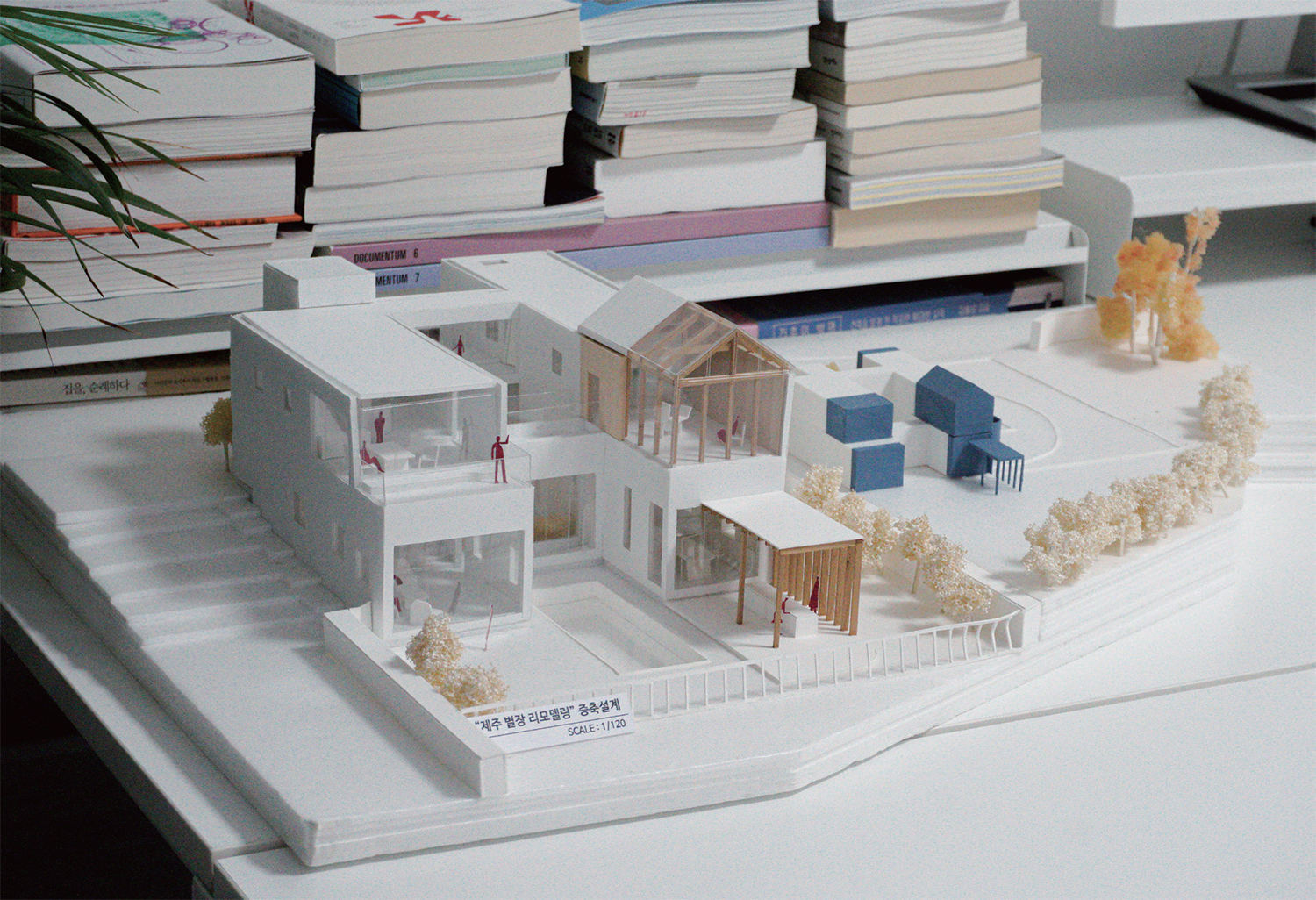
Model of the entire scheme of Jeju Summer House Remodeling
interview Lee Sunmin Principal, Circle Triangle Square Architects × Lee Sowoon
Appearance in Jeju
Lee Sowoon: We have to start by talking about your office name. It’s such an endearing name.Lee Sowoon: I was surprised to see that your office is located on quite a busy street with a lot of tourists passing by.
Lee Sunmin: I came to Jeju without any personal ties here. A quiet place surrounded by tangerine orchards certainly had its appeal, but I figured no one would ever find me there. (laugh)
Lee Sowoon: Did you start surfing after moving to Jeju?
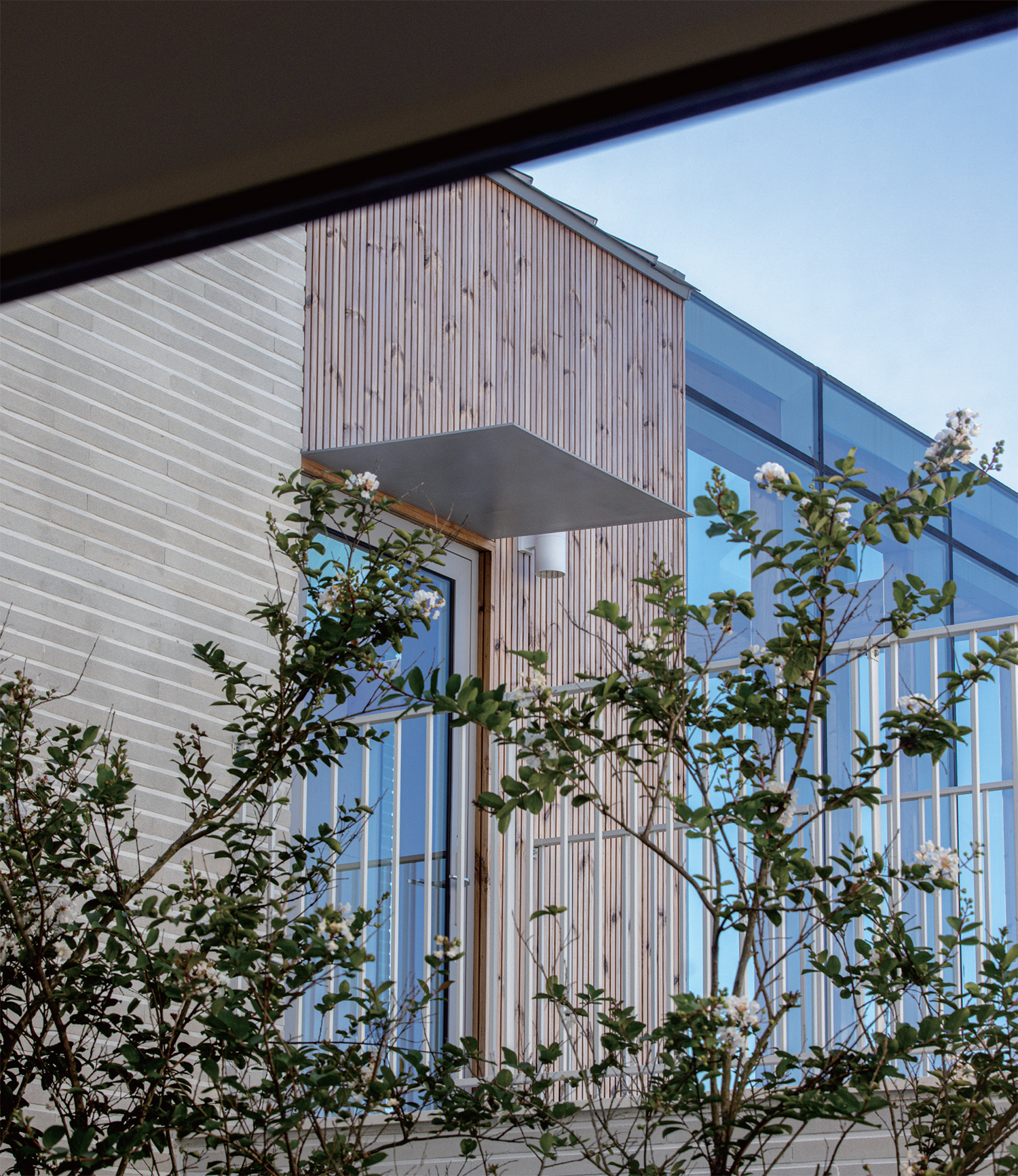
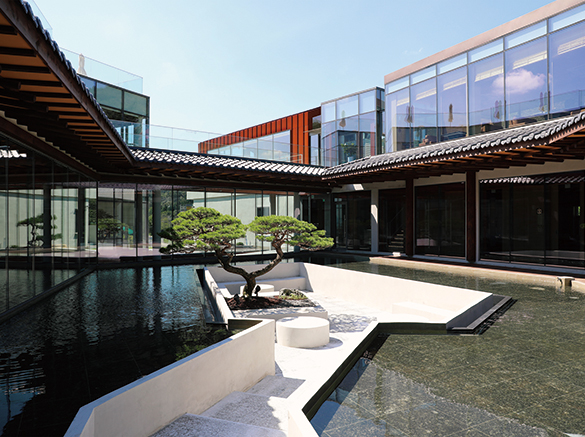
Jeju Summer House Remodeling (2026). View of the extension façade across the courtyard from the corridor. ©studiofacet
Lee Sowoon: You were born in Seoul, and both your education and professional career took place there. After graduating from Myongji University, you worked at Junglim Architecture (hereinafter Junglim) and then Soltozibin Architects (hereinafter Solto) before moving to Jeju. Was there a particular reason behind this decision?
Lee Sunmin: While I was working in Seoul, I struggled with health issues. I’ve always been the type of person who wants to do their very best, however my body could not keep up with this mindset. At both Junglim and Solto, I reached points where I had to take leaves of absence because of my health. Even after taking time off and returning to work, the same cycle kept repeating itself. Further down the road, I was advised to undergo a major surgery, and that became the turning point. I decided it would be better to slow down and spend time somewhere closer to nature. My family also loved Jeju, so we all relocated together.
Lee Sowoon: So, your move to Jeju and your decision to establish your own practice happened almost simultaneously. Had you always intended to open an office in Jeju?
Lee Sowoon: So, independence wasn’t part of the original plan. What was it like finding your place within Jeju’s architectural community? There’s a perception that Jeju can be somewhat closed off to outsiders.
Lee Sunmin: Since I wasn’t born or professionally established here, becoming part of the existing community wasn’t easy. But that doesn’t mean people were unwilling to welcome me. I’ve been serving as a committee member for the Jeju Architecture Culture Festival, organised by the Jeju Architects Association, for more than three years now. Through that experience, I gradually became acquainted with many local architects. It was a period of slowly breaking down those social barriers, one step at a time.
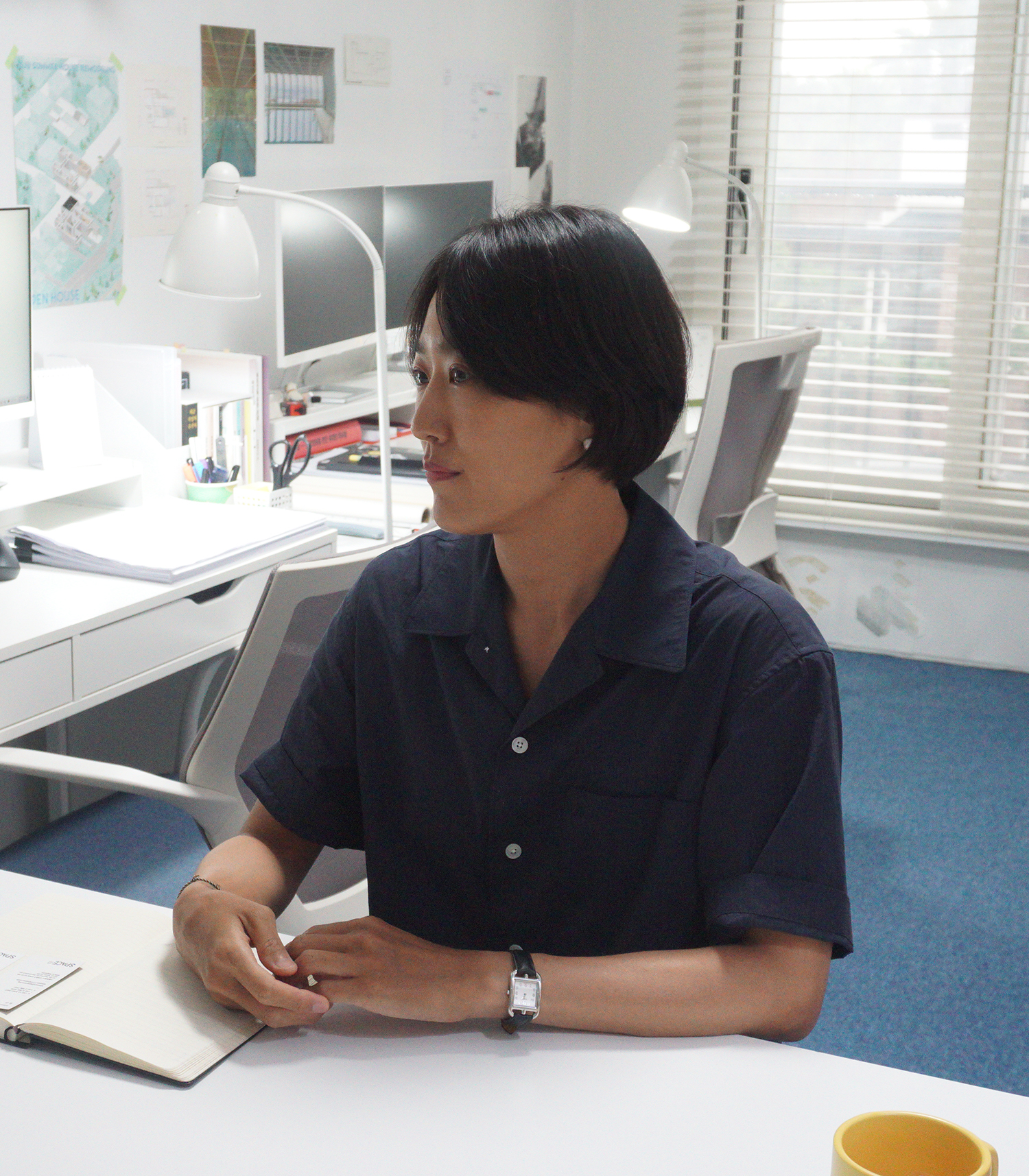 Lee Sunmin
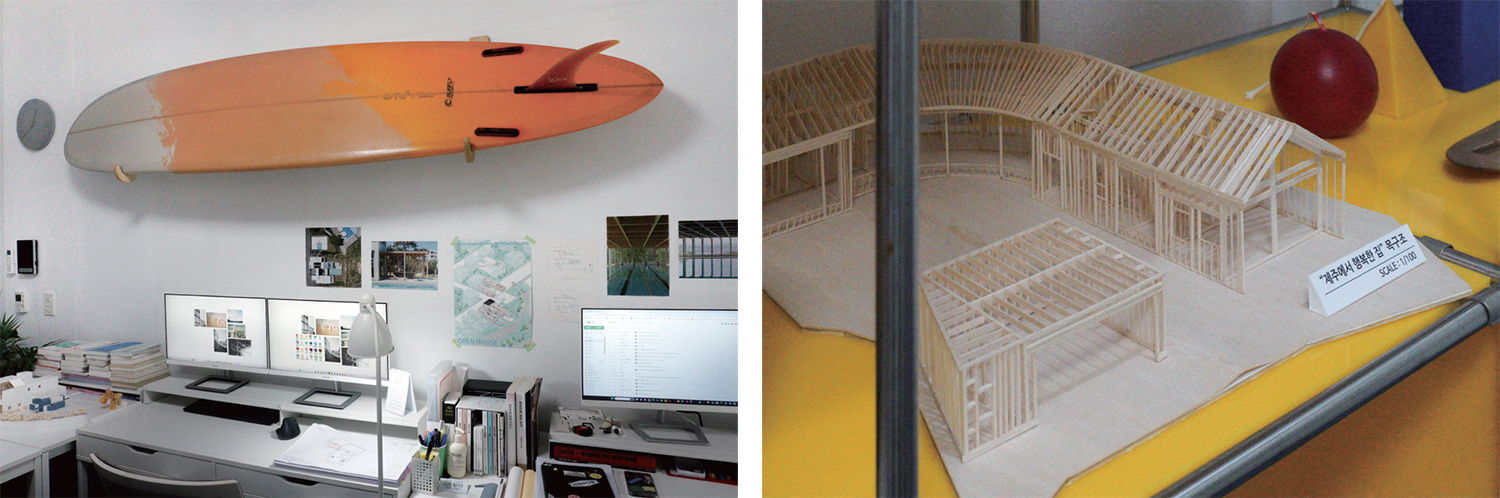
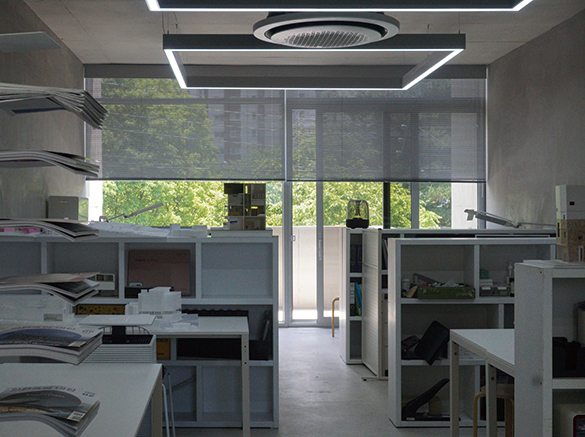
(left) Interior view of Circle Triangle Square Architects, (right) The heavy timber structural model of Happy House in Jeju
A Personal House and House for Everybody
Lee Sowoon: Your first completed project after establishing your practice was Happy House in Jeju (2025). It is fascinating that what looks like a simple gable-roofed house continuously changes its inside and outside spatial conditions with the curves of the roof. How did this form come about?Lee Sunmin: When the clients first came to us, they already had a set of architectural drawings. But once they were ready to build, they realised it wasn’t what they wanted. The design was a nearly square-shaped house, and they told me, ‘I don’t want a box-shaped house.’ So, I explored a number of alternatives that moved away from that geometry. One of the schemes had an L-shaped layout, and I began rounding off the corners. The site itself was an irregular polygon, and I also wanted the house to feel less enclosed. My intention was to open up the views to the surrounding landscape as much as possible.
Lee Sowoon: The entire house uses a heavy timber structure. Is this related to your professional experience at Solto?
Lee Sunmin: Solto was where I was first introduced to timber construction. By that point in my career, I had already had enough experience that I was mostly involved in larger-scale projects, so I never had the opportunity to work on a project that was entirely timber-structured. Still, I learned a great deal by observing my junior colleagues and listening to the principal architect. As a result, when I eventually started working with timber myself, it didn’t feel it being completely unfamiliar or intimidating.
Lee Sowoon: This year, you also completed Jeju Summer House Remodeling. Since opening your practice, its notable that you have been receiving many commissions for residential projects. When you first meet a client, what kinds of questions do you ask?
Lee Sunmin: Before starting my own office, I had never worked on residential architecture. Once I began, I realised that although the projects are smaller in scale, there are actually far more issues that need to be resolved. That made asking the right questions incredibly important. I ask clients about how they have lived in the past, what types of homes they’ve lived in, why they want to build a house in Jeju, or why they want to live in a single family home in the first place. Once I understand their basic requirements, I try to gain a deeper understanding of their lifestyles. I ask detailed questions such as what do they enjoy, what kind of scenery they would like to see at what time of day, and through which window they imagine experiencing those views.
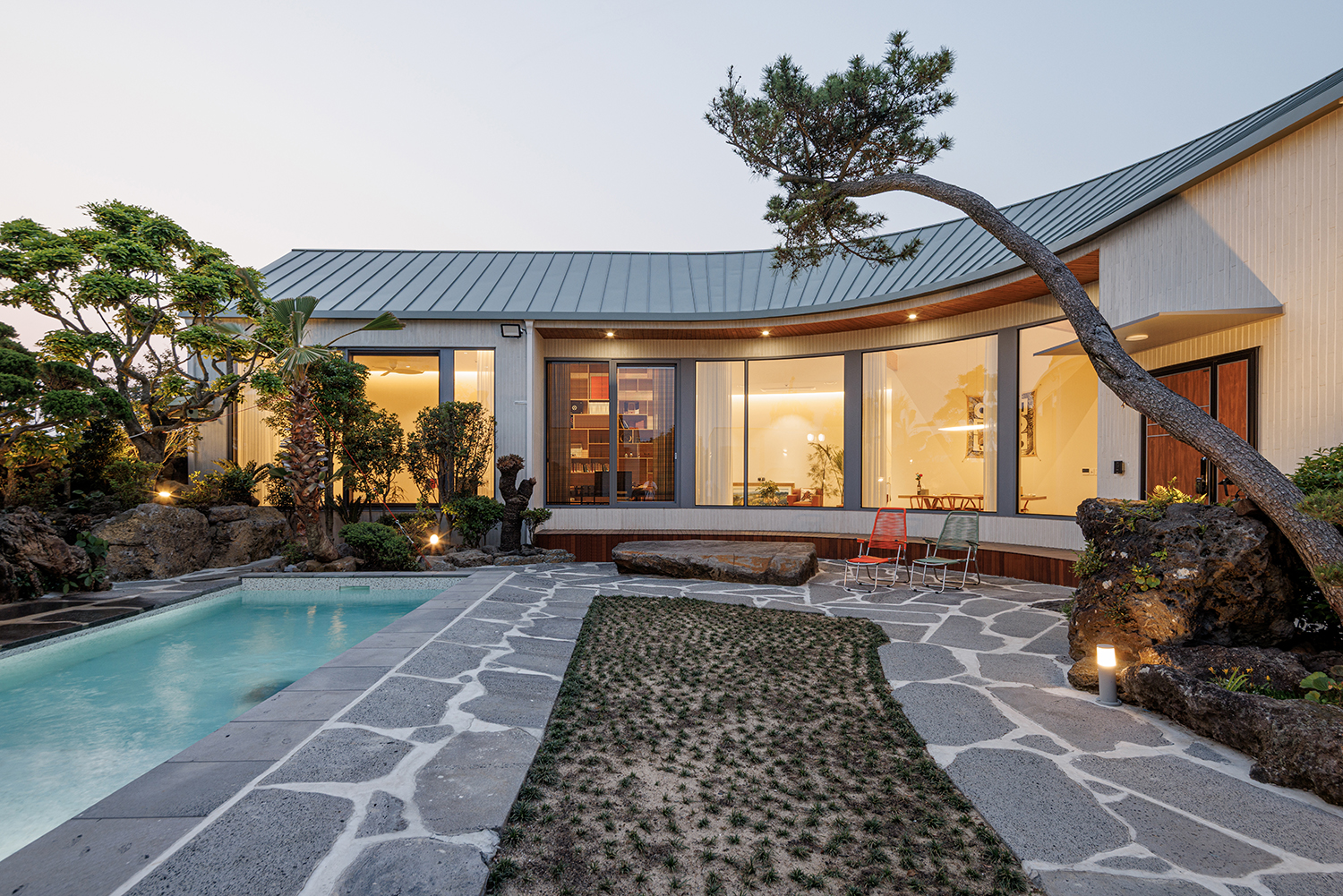
Happy House in Jeju ©studiofacet
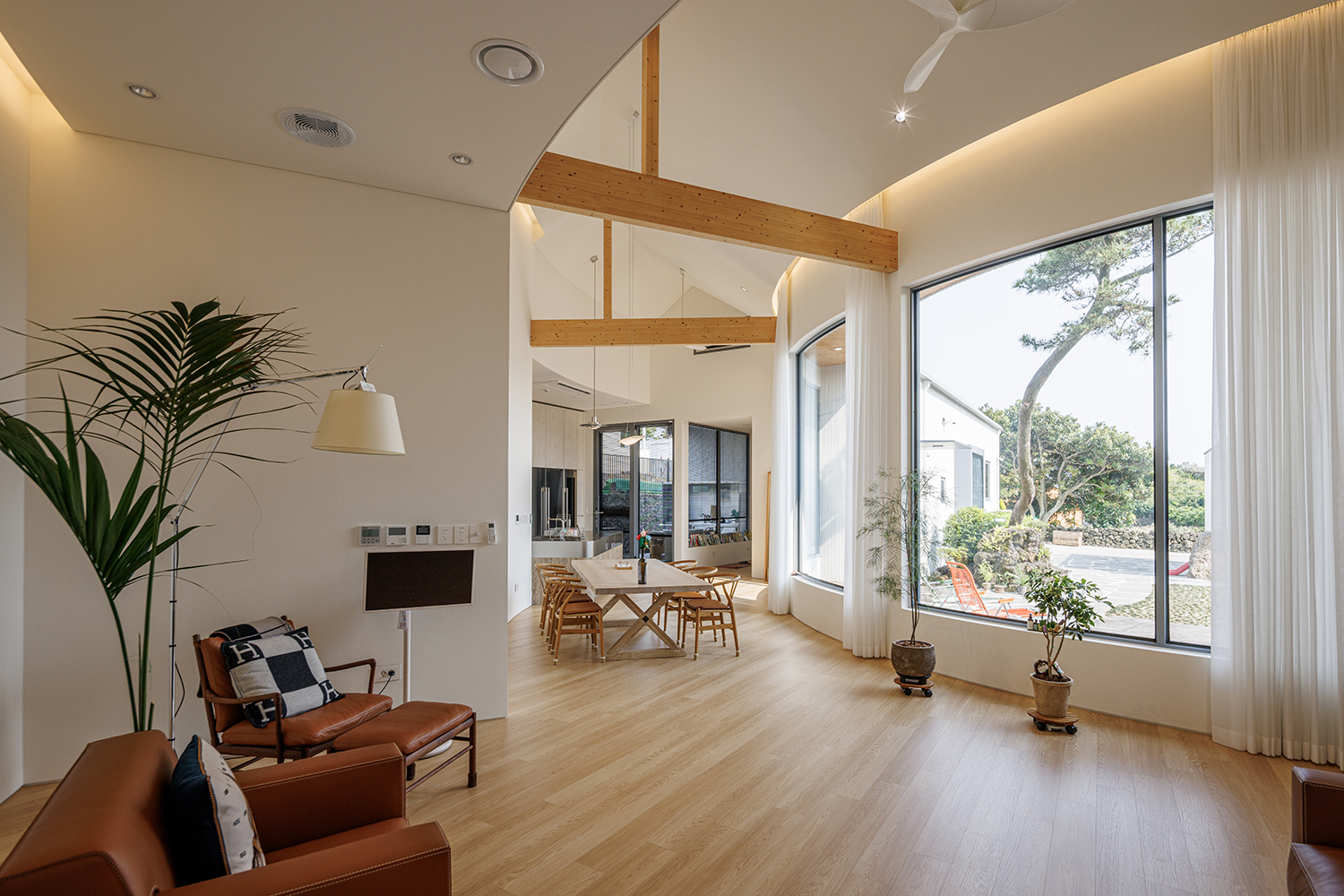
Happy House in Jeju ©studiofacet
Lee Sowoon: You have also continued to participate in architectural design competitions. Although you said that you moved to Jeju for a slower pace of life, judging by your work it’s hard to imagine you’ve had much time for rest!
Lee Sunmin: I do not participate in design competitions simply to sustain the office. More importantly, I genuinely want to work on public architecture. I believe it is one of the most meaningful opportunities available to architects. When I founded my practice, I made a promise to myself that I would enter at least one competition in the first half of the year and one in the second half. The reason I focus on competitions in Jeju is that I still have a strong desire to establish my first public building in the region where I now live and practice. Of course it is difficult, and the level of competition has become much higher because everyone pursuing public architecture today is exceptionally talented. It simply means I have to work even harder for the opportunity.Lee Sowoon: Compared with private commissions, how is your approach to public architecture different?
Lee Sunmin: I try as much as possible not to make it personal. Public architecture begins with the recognition that my own experiences cannot serve as the universal answer. These buildings are intended for a broad public audience, so they shouldn’t be designed around the needs of any single individual. Take a school, for example. Children are its primary users, but teachers use it every day, and parents visit as well. When working on public architecture, I have to approach the project from a completely different standpoint than that of the residential projects I have continued to work on since opening my practice.
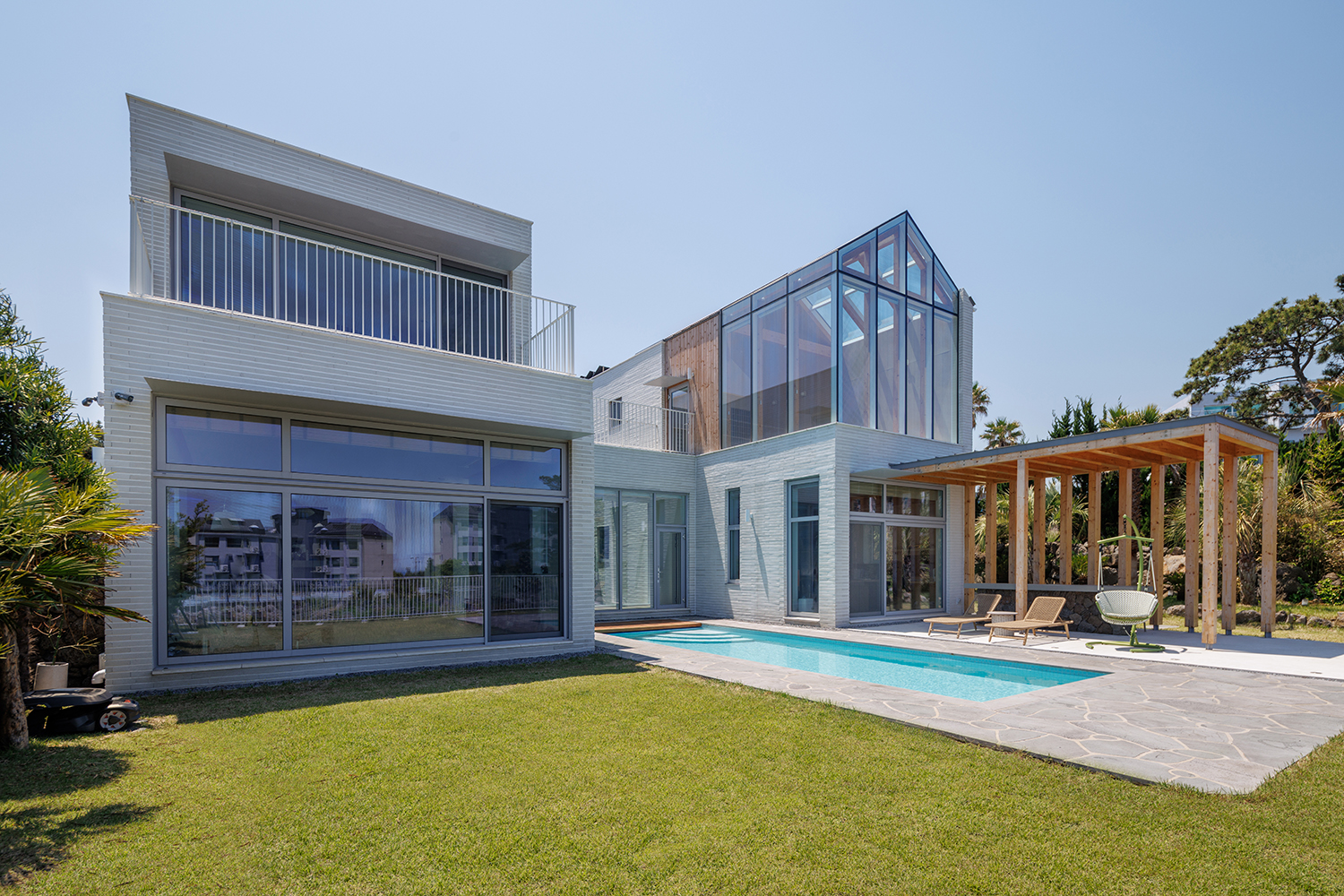
Jeju Summer House Remodeling ©studiofacet
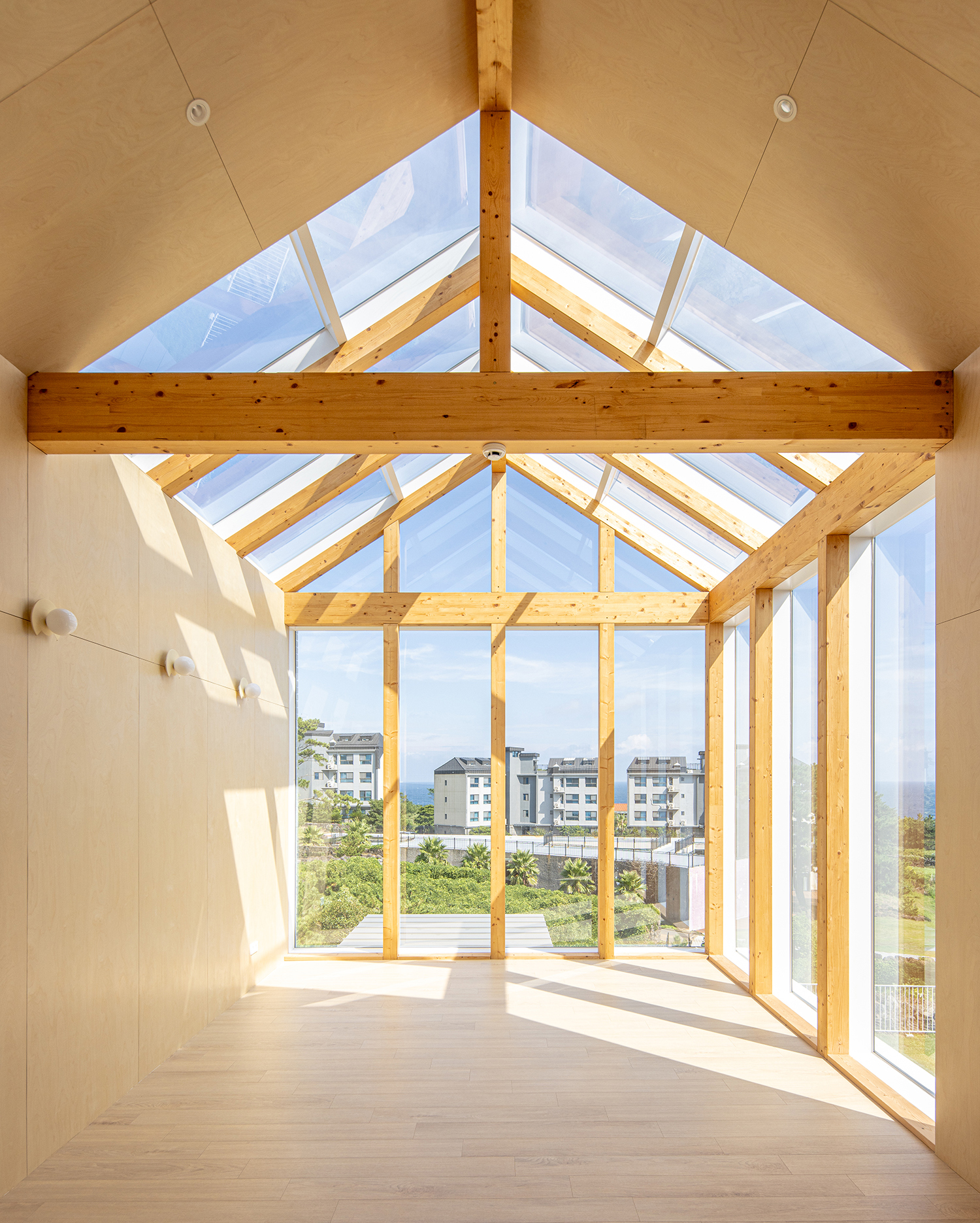 Jeju Summer House Remodeling ©studiofacet
Calm but Firm
Lee Sowoon: You said that, just as the circle, triangle, and square are the fundamental shapes that define space, your architectural philosophy is grounded in staying true to the fundamentals. In practice, what does it mean to ‘stay true to the fundamentals’ during the design process?Lee Sowoon: It sounds almost like each project has its own guiding principle.
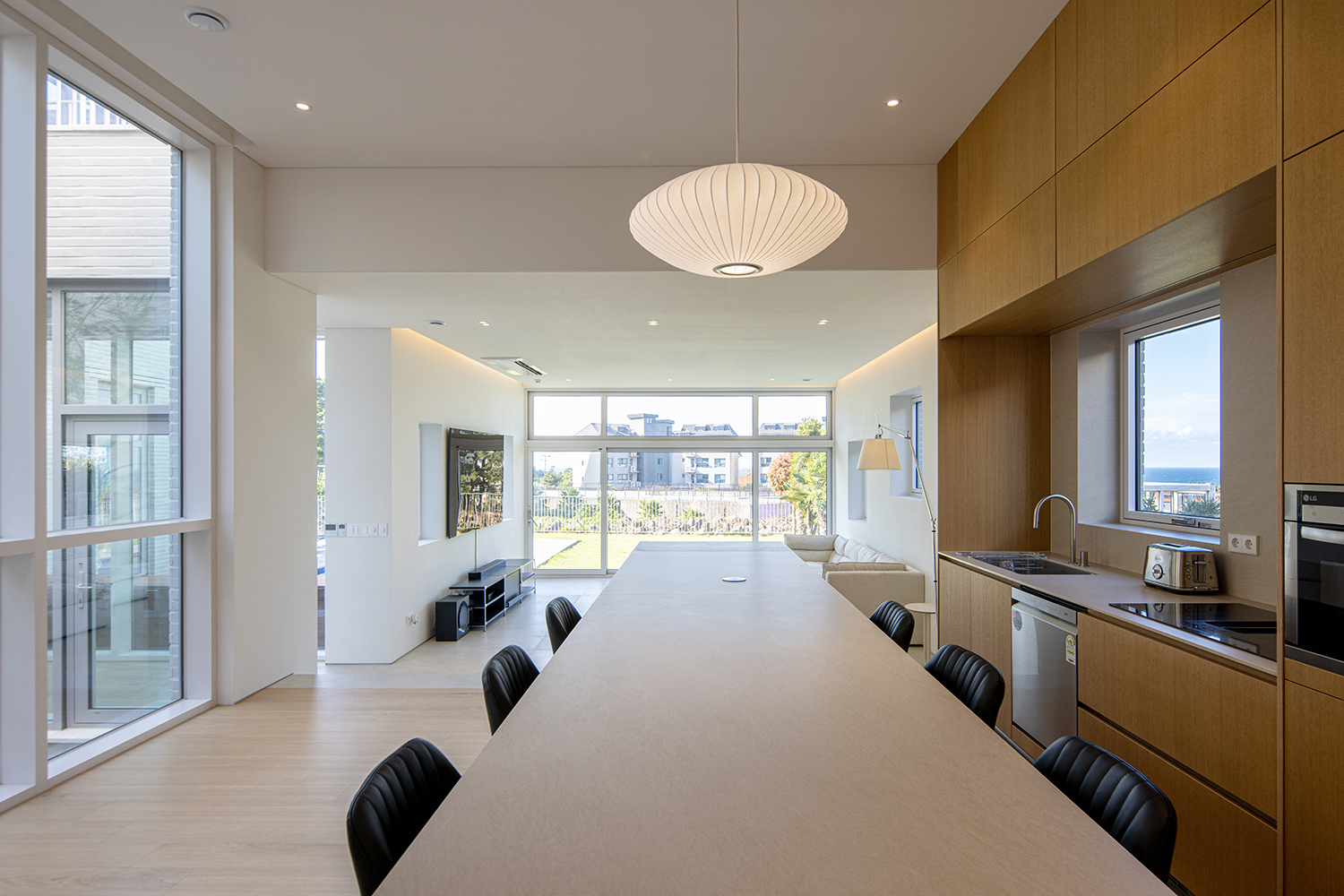
Interior views of Jeju Summer House Remodeling ©studiofacet
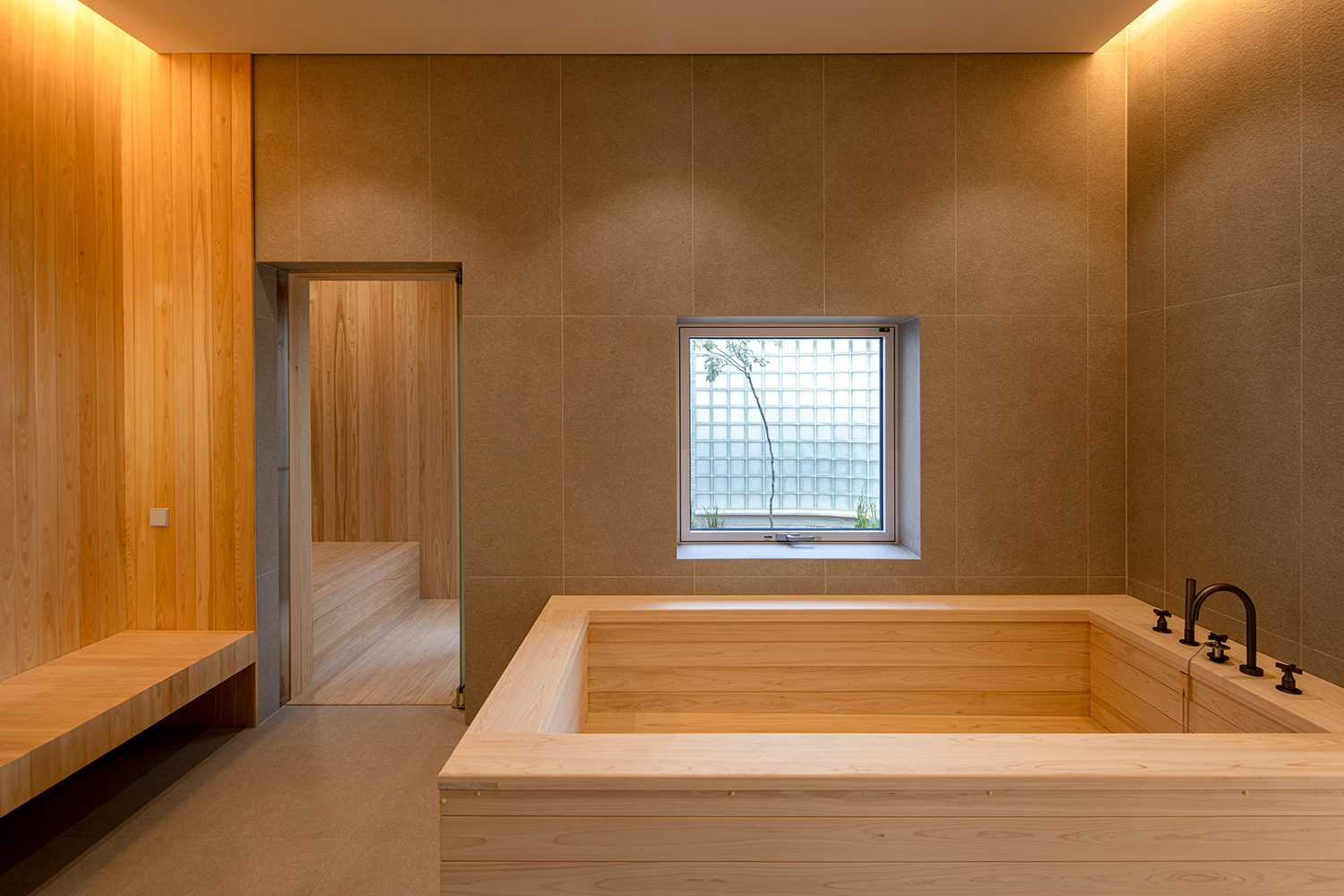
Interior views of Jeju Summer House Remodeling ©studiofacet
Lee Sowoon: You established your practice in 2021, so you are now in your sixth year. Where do you think you are in your journey as an architect?
Lee Sunmin: I see architecture as a lifelong pursuit, so from that perspective, I still feel like I’m only at the very beginning. Although I believe that my work does not fully express my own architectural identity at this stage, timber construction is something I genuinely enjoy and therefore it is a direction I want to continue pursuing.
Lee Sowoon: Your move to Jeju was closely connected to concerns about your health. I imagine you have given a great deal of thought to what it means to sustain a long career as an architect.
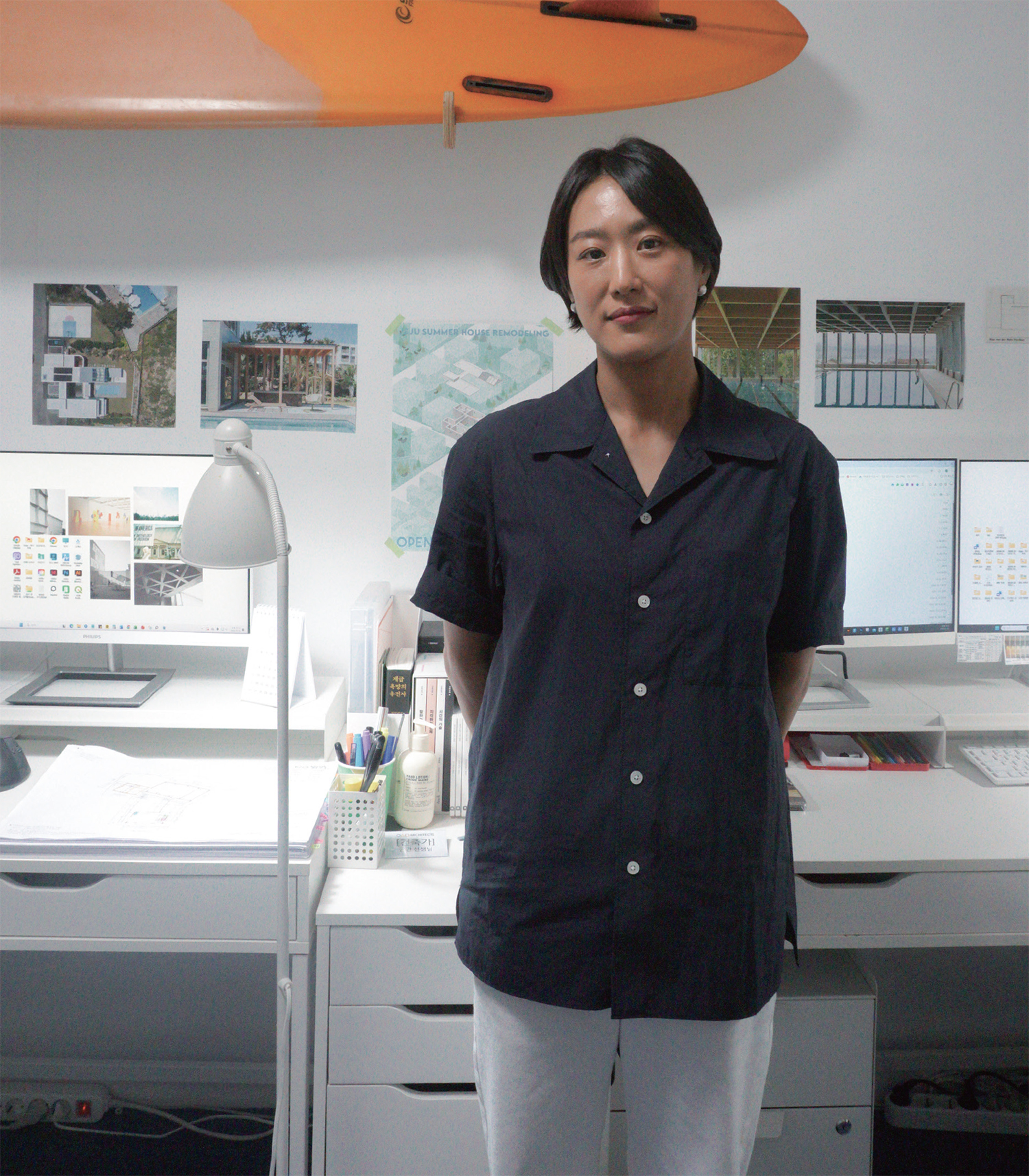
Lee Sunmin