SPACE September 2026 (No. 706)
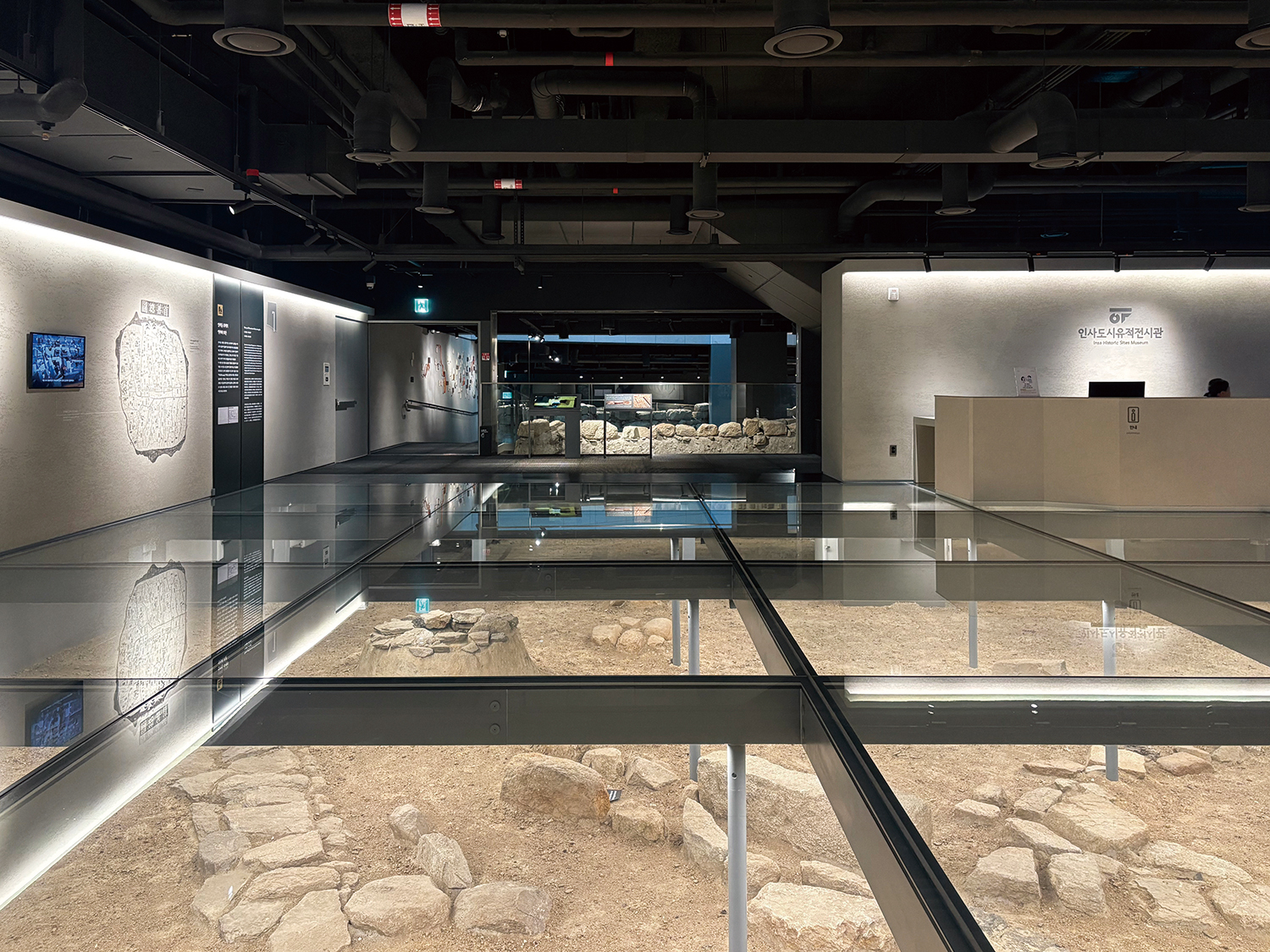
A view of the Zone 2, ‘Wells of Hanyang’. Behind it lies the site of the house known as The Large House in the Village. ©Kim Jeyeon
Insa Historic Site Museum
Permanent exhibition
Next to an office building at the entrance to one of Insa-dong’s alleyways, a soft glow rising from below ground catches the eye. Looking down, an unexpected landscape appears amid the city: rows of cuboid stone blocks set on an uneven earthen floor. This is the Insa Historic Site Museum, which opened in July. Built directly on a buried cultural heritage site and now Korea’s largest urban archaeological site museum, it peels back the layers of time to reveal the sixteenth-century city once more.
Entering the exhibition space, visitors first encounter a communal well from the early Joseon period set beneath a glass floor. The sight of visitors huddled together above the cylindrical well, measuring 1.6m in diameter and 4.9m deep, evokes the public space around which people once gathered and shared in as part of everyday life. From the well, the visitor deck continues like an alleyway, finished in open grating to create the sensation of walking directly above the archaeological remains. Along the deck, the remains of six buildings from the backstreets of Jongno, drainage channels, and an old road are revealed in sequence. Even the site’s gentle slope has been preserved, allowing visitors to experience the remains not as a series of fragmented sites but as part of a single urban fabric.
The exhibition is broadly divided into six thematic zones. Zones 1 to 3 begin with an overview of the Insa-dong
archaeological site before leading visitors past the communal well and through the backstreets of Jongno, offering something akin to a walk through the city. Zone 3.5 serves as a transitional space, after which Zones 4 and 5 turn their attention to individual finds, including Hangeul metal movable type and the Ilseong Jeongsiui, an astronomical timekeeping instrument. Zone 6 is a lounge that also functions as a hands-on experience space.
The largest portion of the museum is occupied by the remains of six houses extending across Zones 3 and 4. For each building site, the original plot, floor plan, sections and elevations were inferred through a comparative examination of maps and historical documents from different periods, together with the spatial continuity of the surrounding remains. Of the resulting hypotheses, the reconstruction with the greatest degree of spatial coherence was selected. Digital content, including 3D reconstruction videos, helps visitors to understand the remains when little more than foundations and floors survive. A total of 523 artefacts are presented here alongside the building sites from which they were excavated, illuminating not only the objects themselves but also their social histories—how they were used and circulated within the city.
The Insa Historic Site Museum dates back to 2020. The Insa-dong archaeological remains were discovered when excavations began as part of an urban redevelopment project in Gongpyeong Districts 15 and 16. Their significance became increasingly apparent with the discovery of important artefacts demonstrating the scientific culture of the early Joseon period. Following several rounds of meetings and committee deliberations, construction of the museum began in earnest in December 2024. Hyupdongone (Principal, Lee Minah) designed the project, with construction undertaken by Junglim CM. The work was completed in April 2026, and the museum officially opened in July.
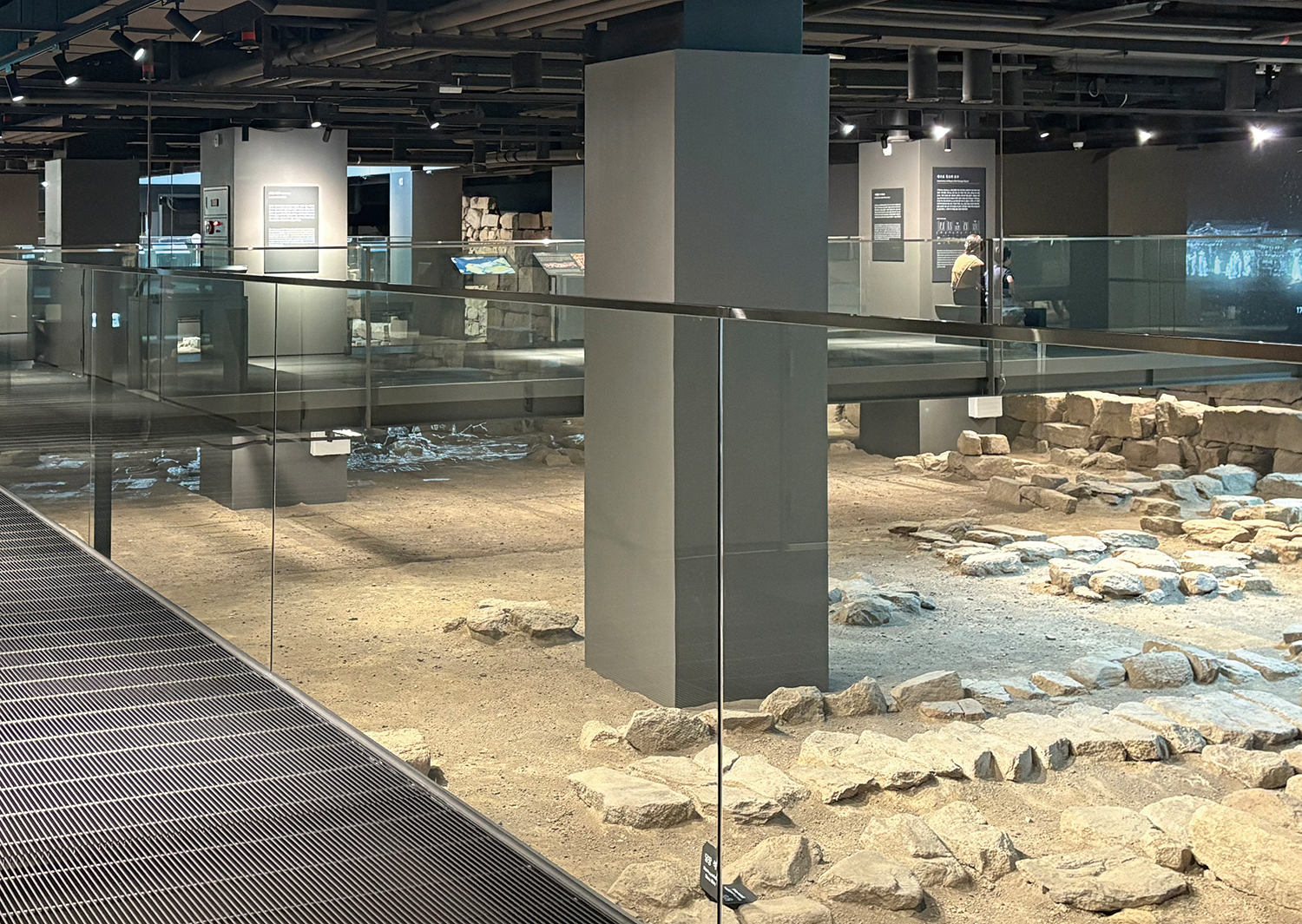
The sites of the houses known as The House at Pimat-gil and The Small House at the Corner are visible in Zone 3 ‘Back Alleys of Jongno’. Transparent grating and glass railings allowing visitors to experience the archaeological site remains in situ. ©Kim Jeyeon
This is the second project, following the Gongpyeong Historic Site Museum, to apply the Gongpyeong Rule. Under this system, buried cultural heritage sites uncovered during urban redevelopment must be preserved in their entirety and in their original location, in return for which the development is granted additional floor area ratio. In this case, the original floor area ratio of 803% received an incentive of 249%, bringing the total to 1,052%; accordingly, the permitted building height increased from 70m to 104m. The museum occupies the first basement level and, having been donated to the Seoul Metropolitan Government as a public contribution, is now operated as a branch of the Seoul Museum of History.
Born out of the same ordinance, the Insa Historic Site Museum bears a broad resemblance to the Gongpyeong Historic Site Museum, yet differences in their urban contexts and excavated artefacts give the two exhibitions distinct characters. While the Gongpyeong Historic Site Museum focuses on everyday life in Hanyang through Imunan-gil and the Jeon-dong alleyway, the Insa Historic Site Museum examines the commercial district around Pimat-gil and the residential neighbourhoods behind it, while using excavated artefacts to explore the scientific culture of the Joseon period. The Insa Museum is also 25% larger. Across its 4,810m² exhibition space, the museum clearly reveals how the urban fabric at the heart of Hanyang – including Pimat-gil and the Sijeon Haengnang, or rows of government-licensed shops – was linked to urban infrastructure such as drainage channels and communal wells, and to the individual plots interspersed among them to form a broader urban context. Jeon Bonghee (Professor, Seoul National University), who served as an adviser to the exhibition, explains: ‘The significance of the Insa Historic Site Museum lies not so much in its being the largest of its kind in Korea, but in the fact that the relationships between individual archaeological remains have been preserved together within a single space.’
An on-site museum such as this makes tangible the fact that history is not confined to museums, but survives beneath the very city in which we live. It is also significant as the product of an effort to reconcile development with preservation in urban redevelopment, foster cooperation between the public and private sectors, and broaden the range of options available for sustainable development. Equally noteworthy is that the approach did not end as a one-off experiment with the Gongpyeong Historic Site Museum, but has now been carried forward at the Insa Historic Site Museum. Yet stepping outside the exhibition space – a place shaped by so much debate and deliberation – one is immediately confronted by the high-rise building rising above it. The sense of dissonance between the underground exhibition space, which seeks to preserve the context of the historic city, and the vast building above it, which completely reshapes the urban fabric, is one of the challenges that must be considered when employing the Gongpyeong Rule as a solution.
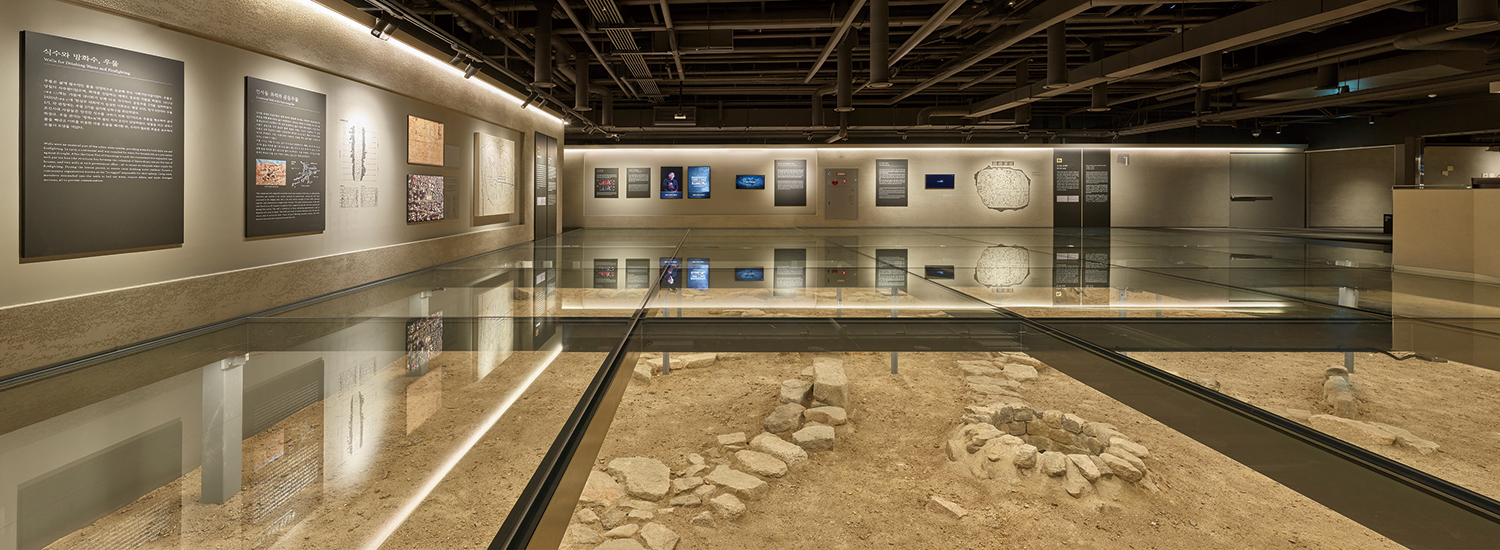
Exhibition view of Zone 1 ‘History and Preservation of the Insa-dong Site’ and Zone 2. This is the first scene visitors encounter upon entering the exhibition, introducing its overall theme and content. ©Seoul Museum of History
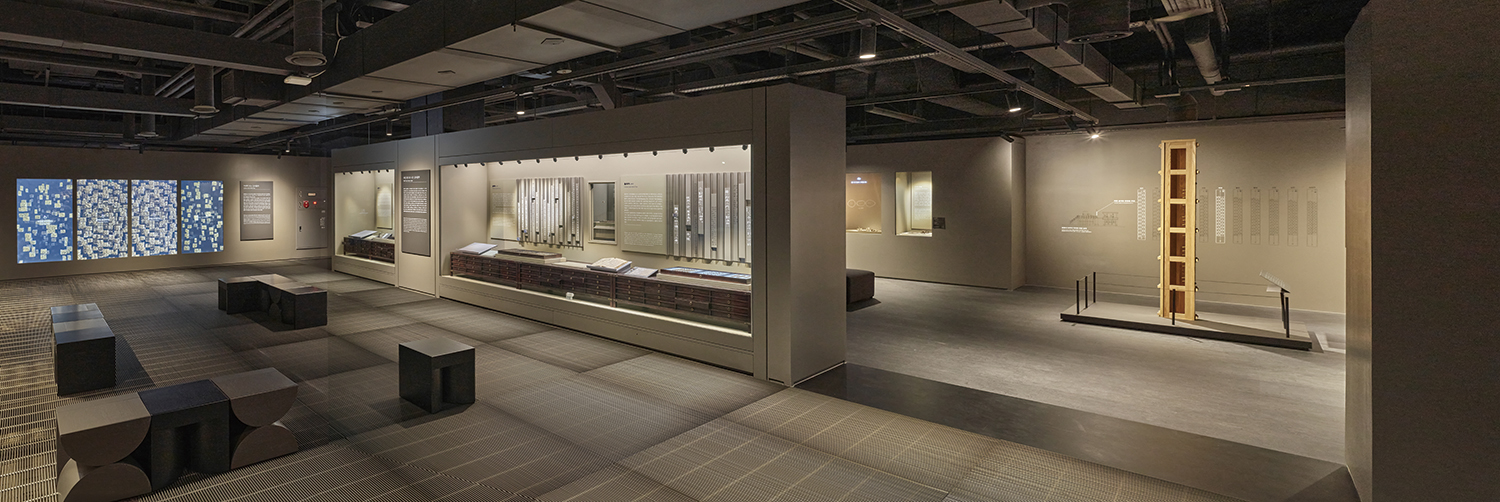
Zone 5, ‘Scientific Culture of the Early Joseon Period’. The excavated archaeological remains are presented in detail alongside their historical context. ©Seoul Museum of History